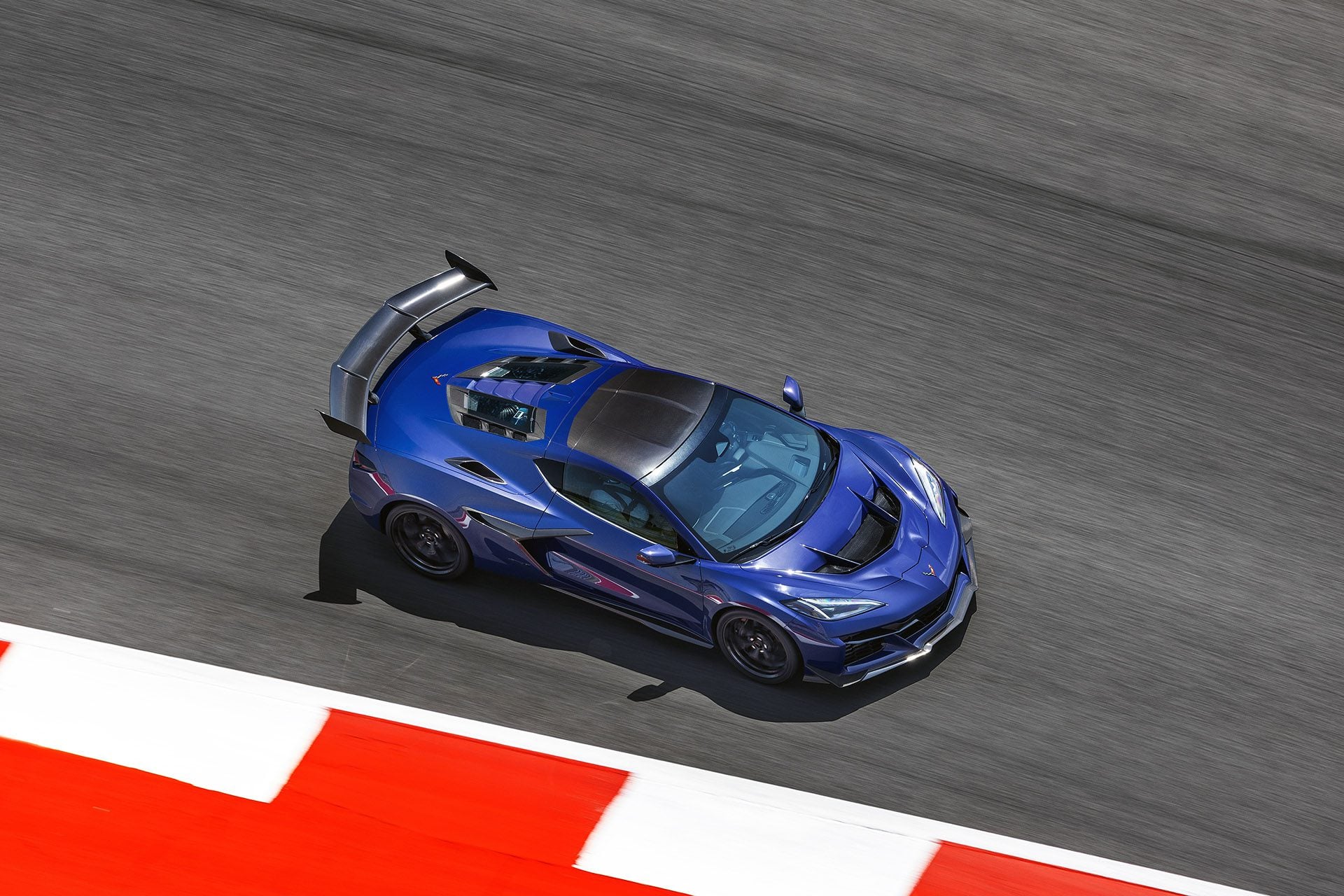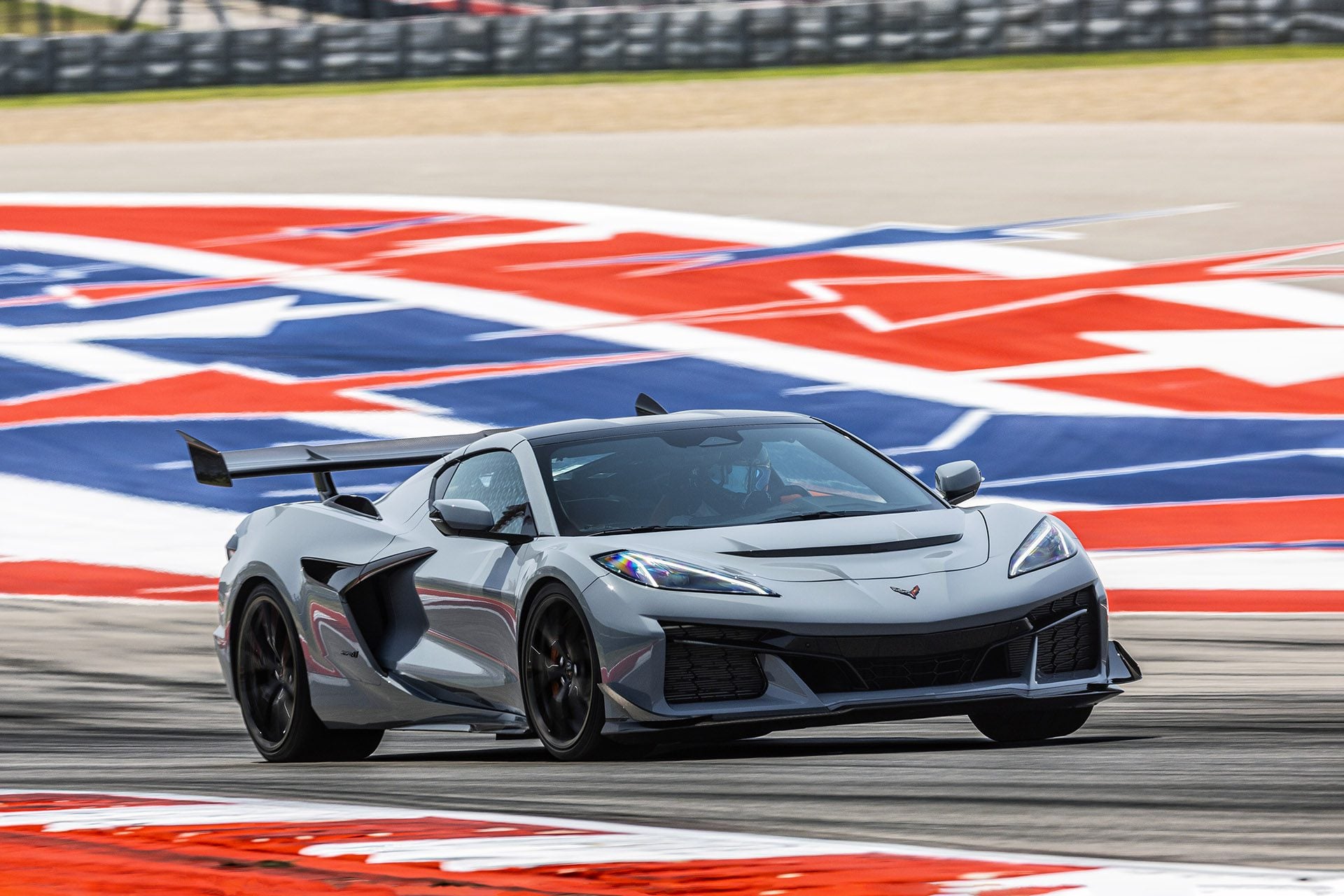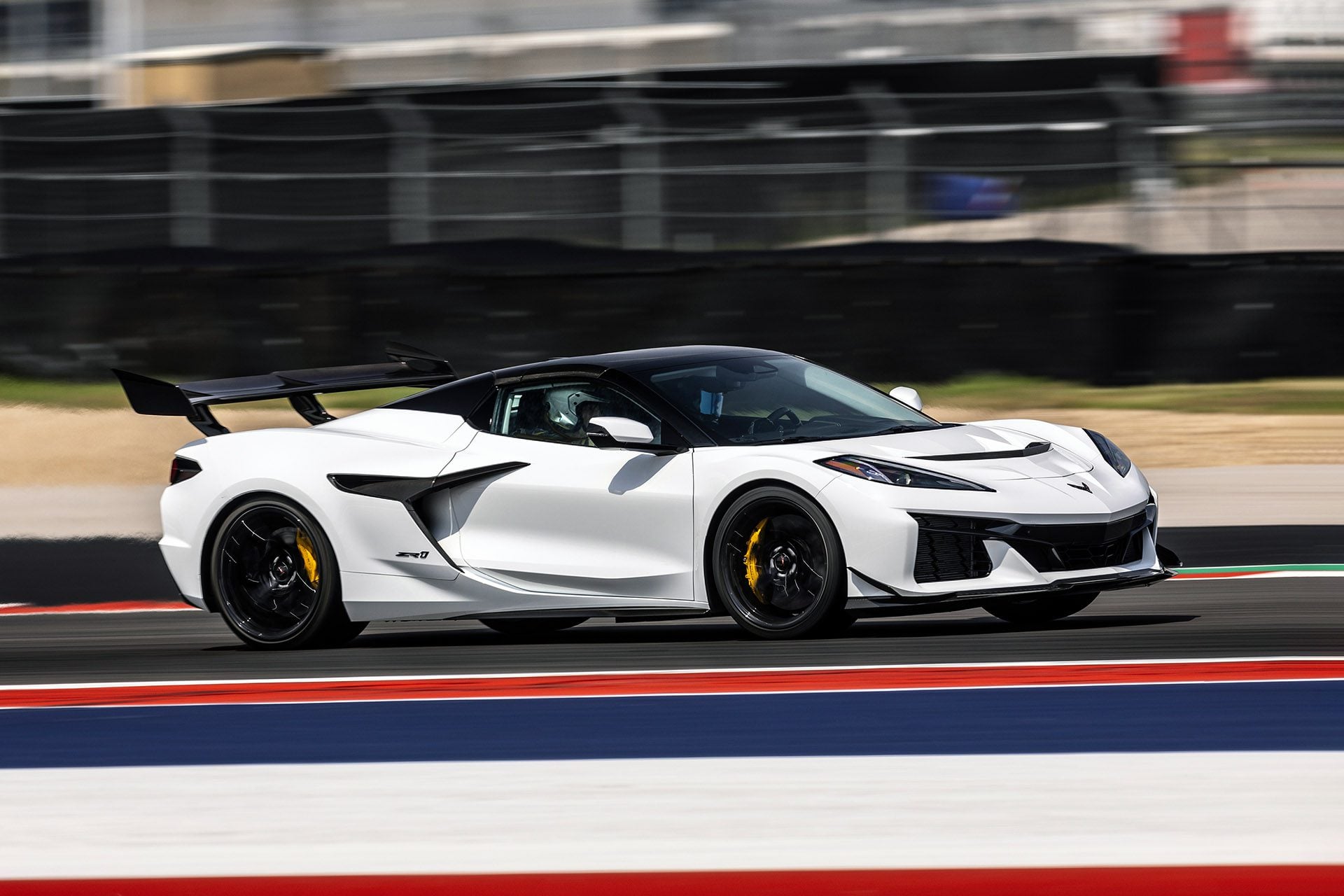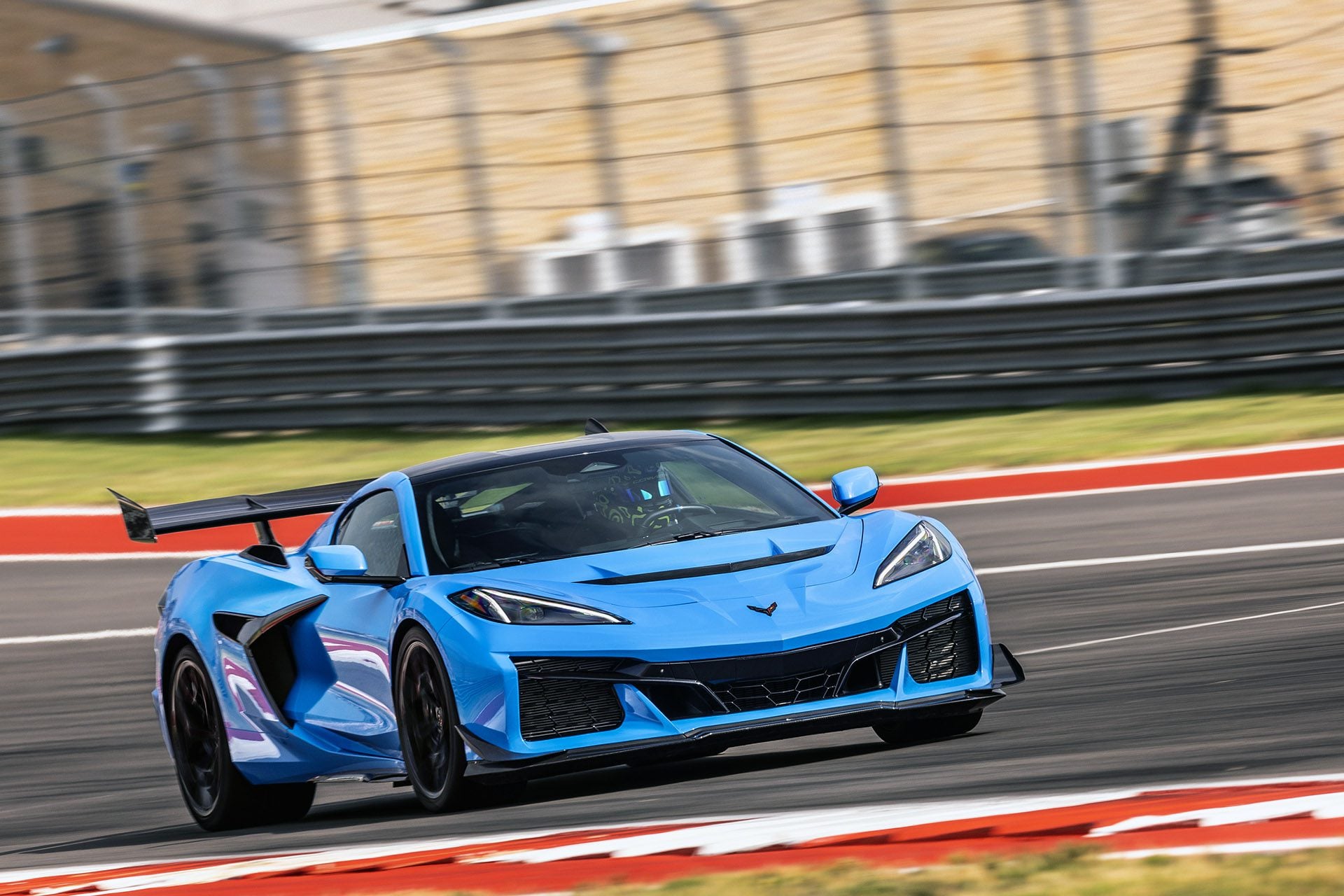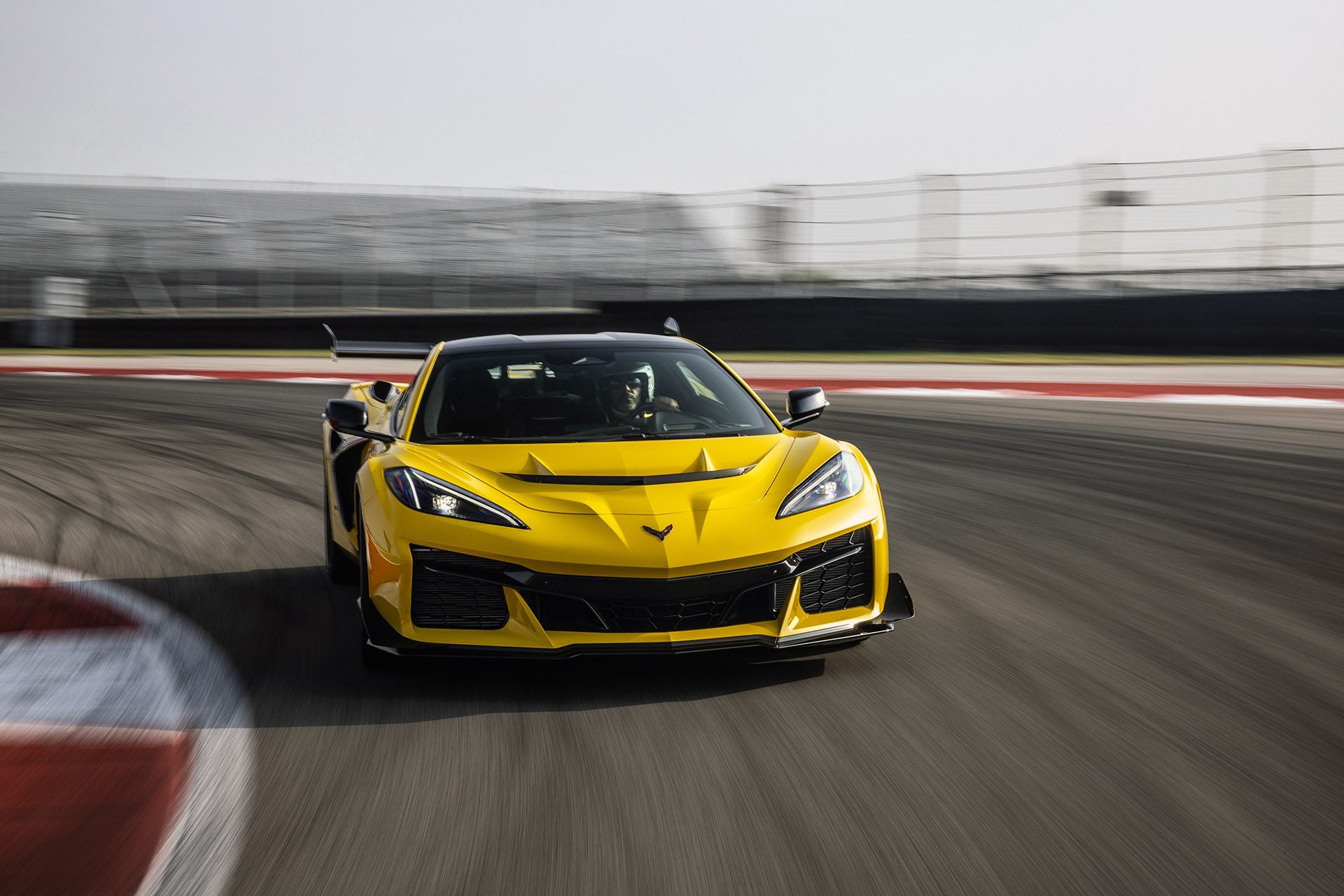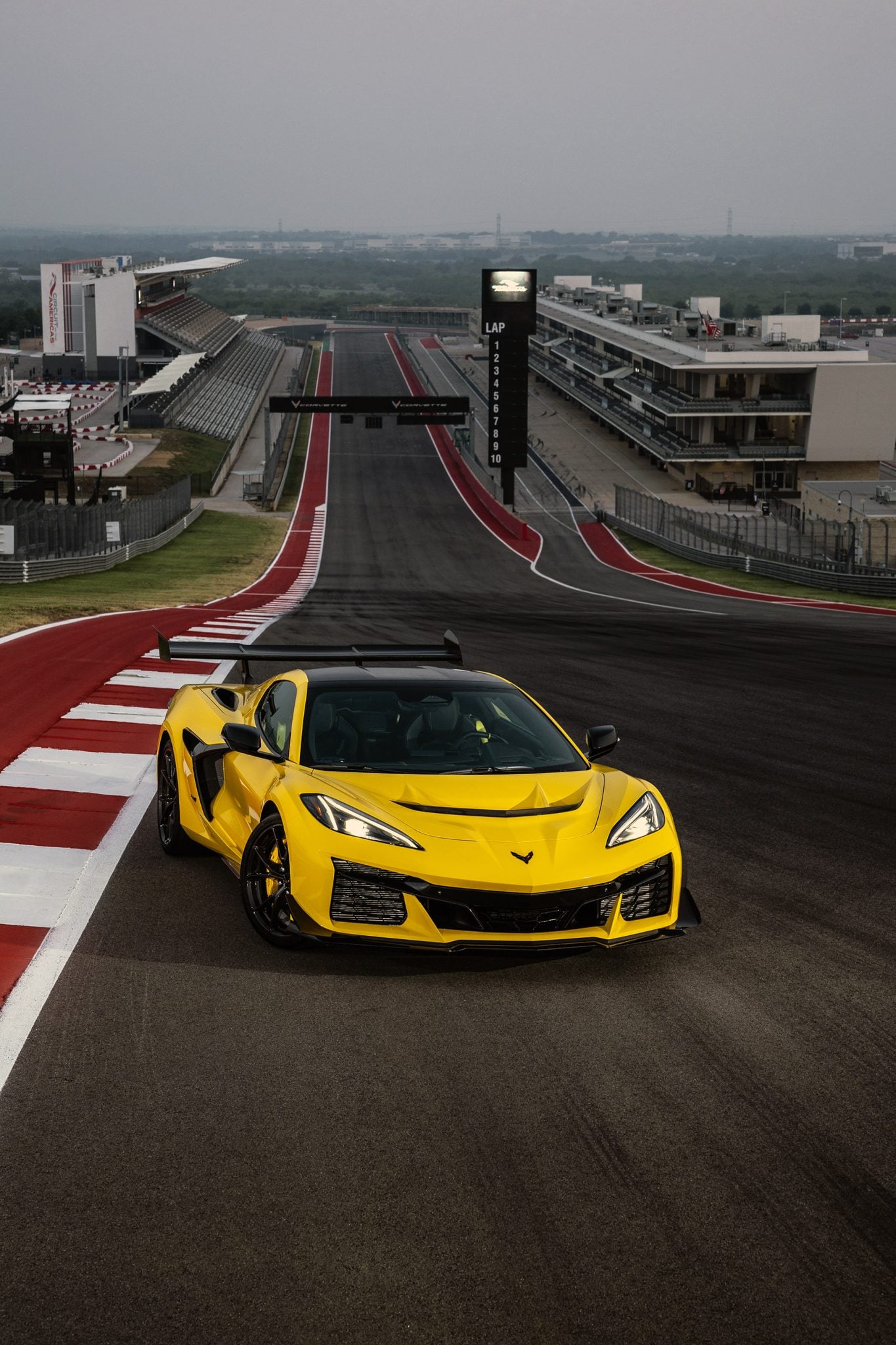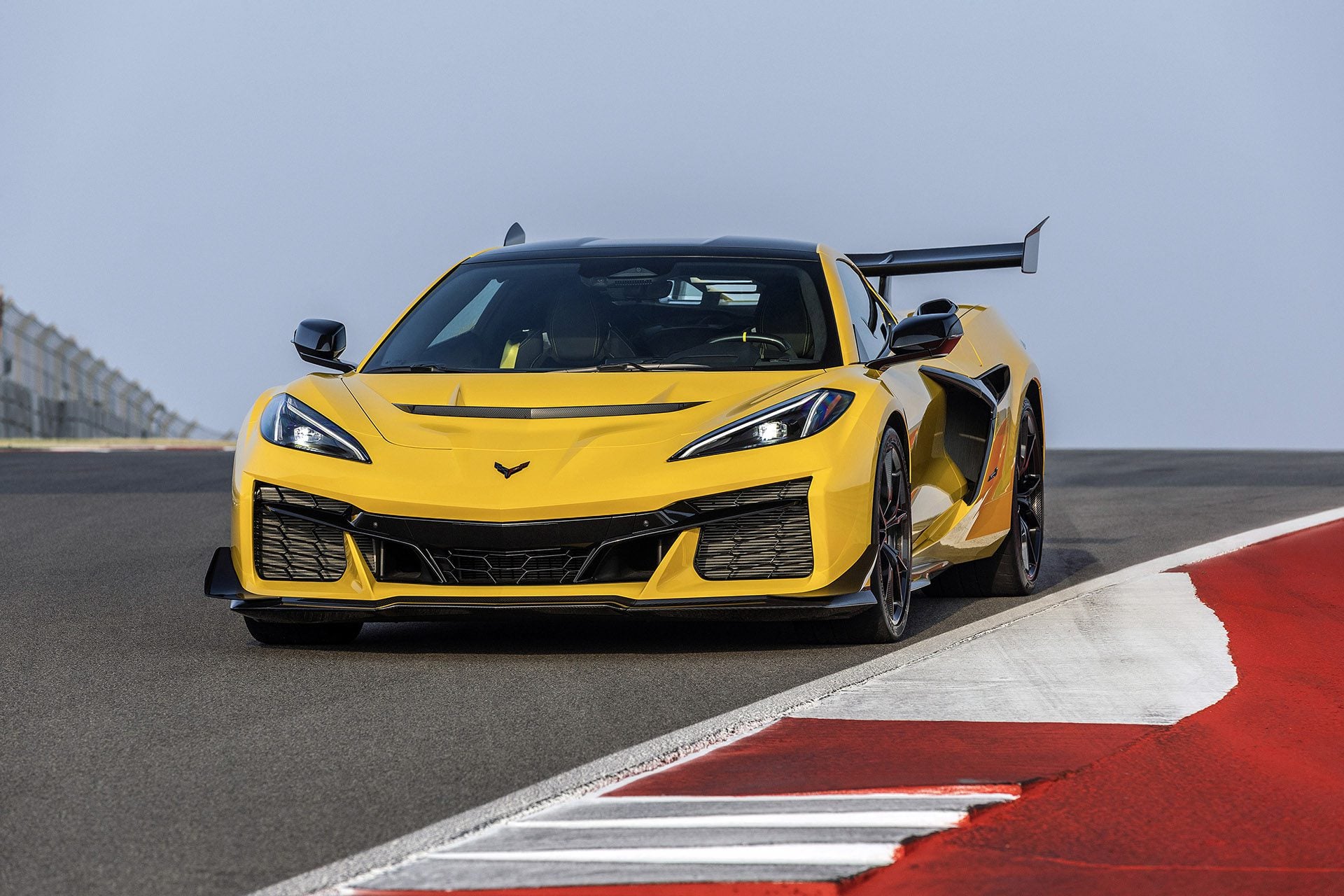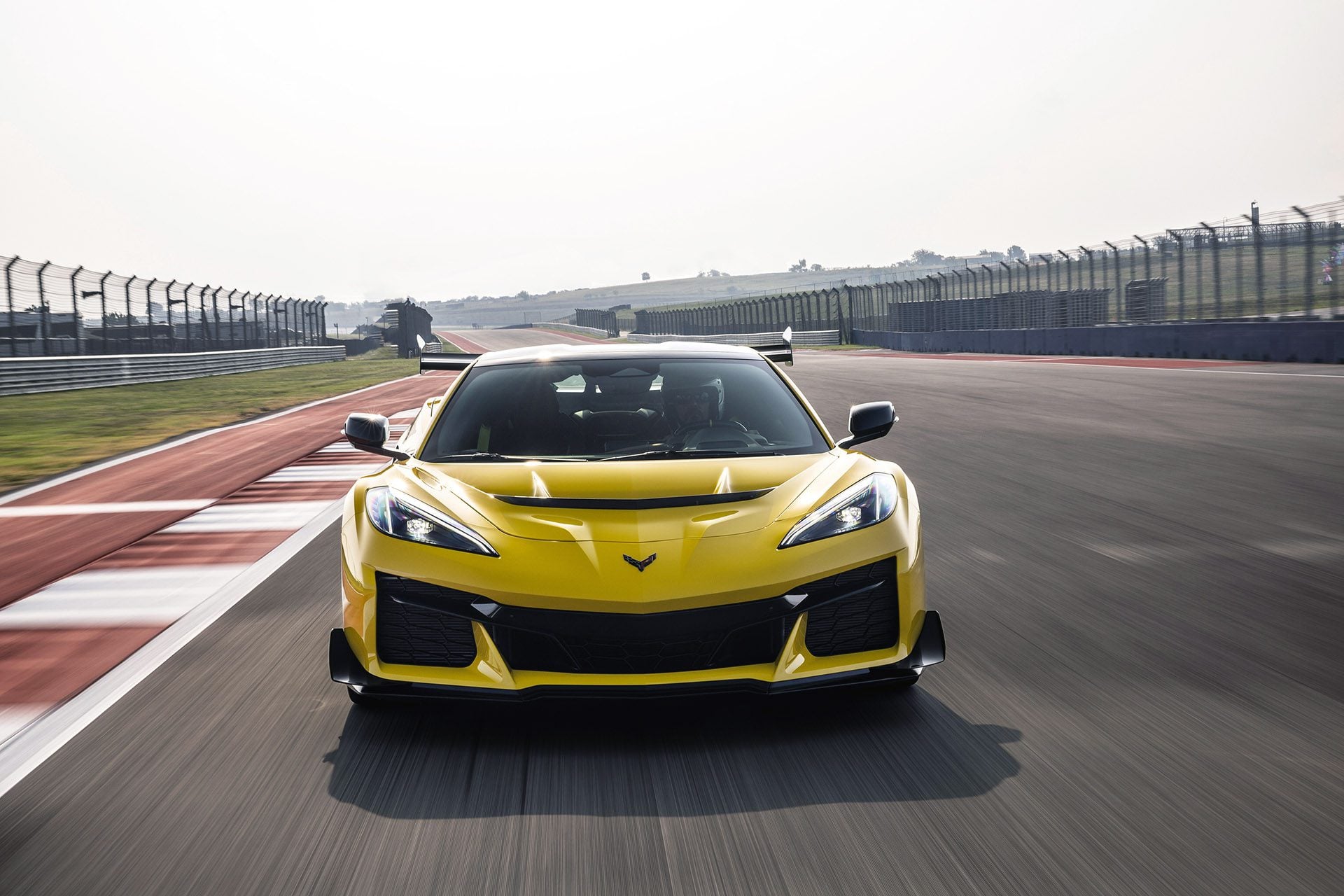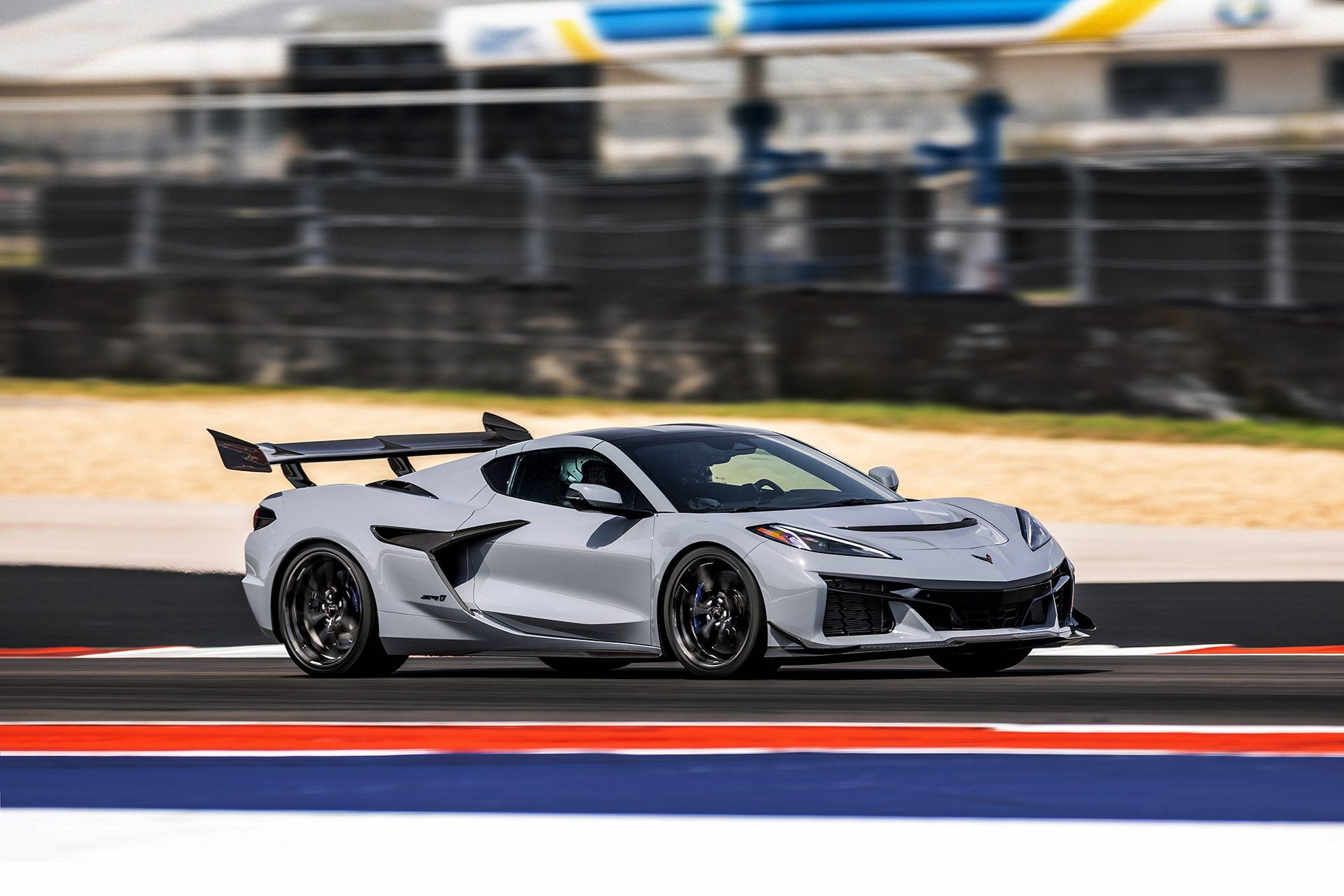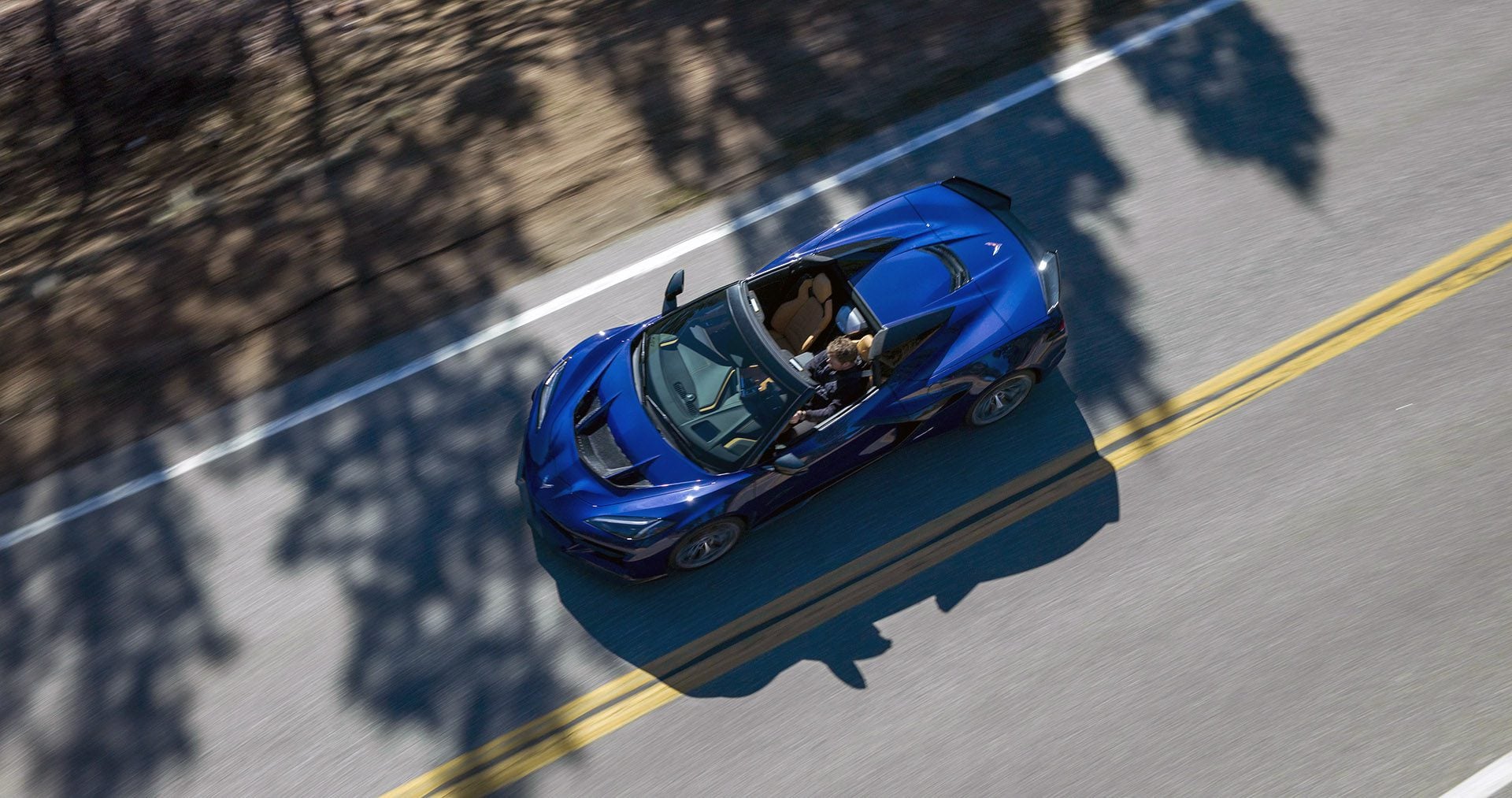
The most powerful V8 ever produced by an American auto manufacturer. In a car that starts at $174,995. Let that sink in.
The LT7 Engine: The Flat-Plane Crank Monster Chevrolet Always Dreamed Of
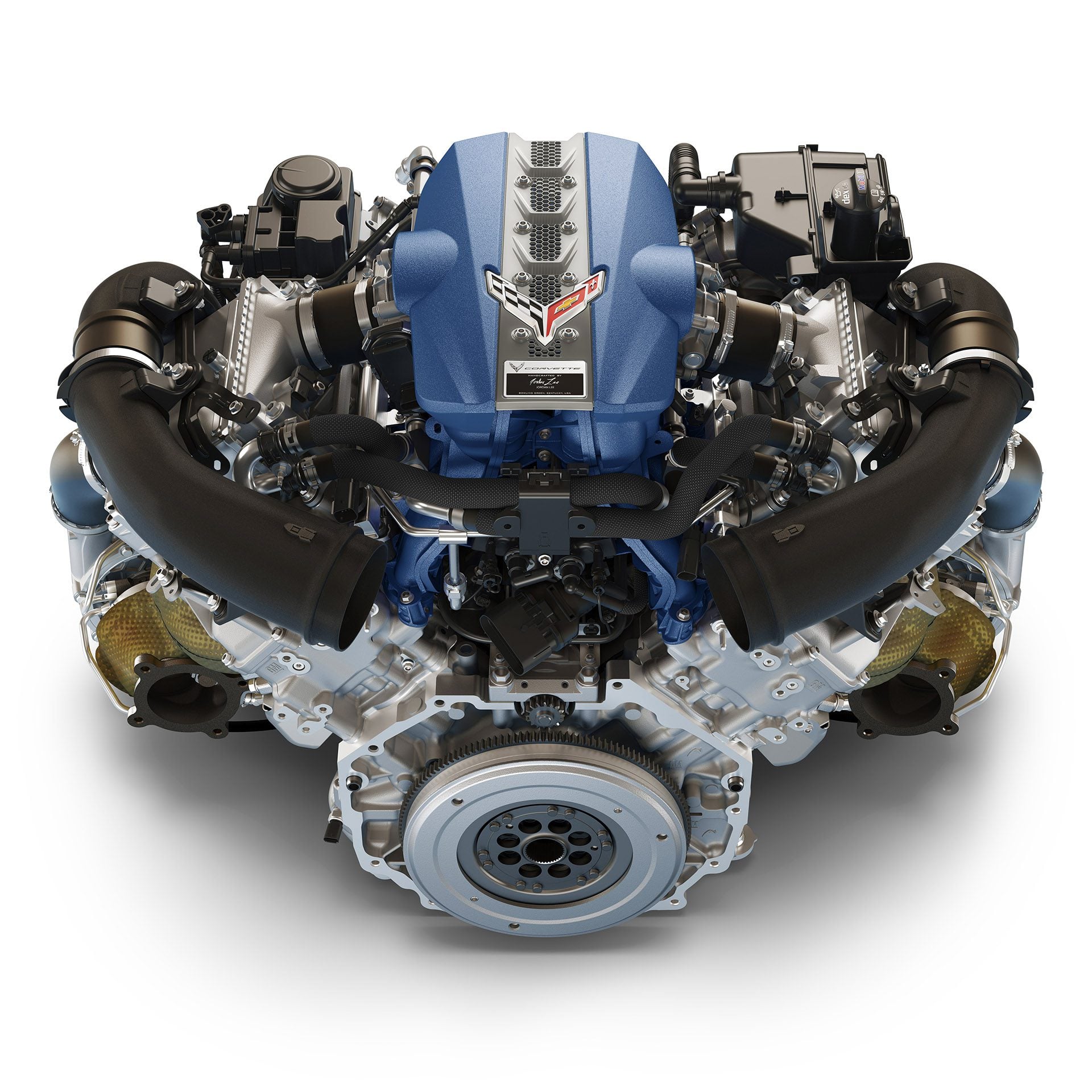
The story of the ZR1’s engine begins with the Z06. The Corvette Z06 uses Chevrolet’s LT6 — a naturally aspirated 5.5-litre flat-plane crank V8 that revs to 8,600 rpm and produces 670 hp. It is, in the words of every publication that’s ever driven it, one of the greatest internal combustion engines in production today. It is the most powerful naturally aspirated V8 ever fitted to a production car.
Chevrolet’s engineers looked at it and thought: what if we added two turbochargers?
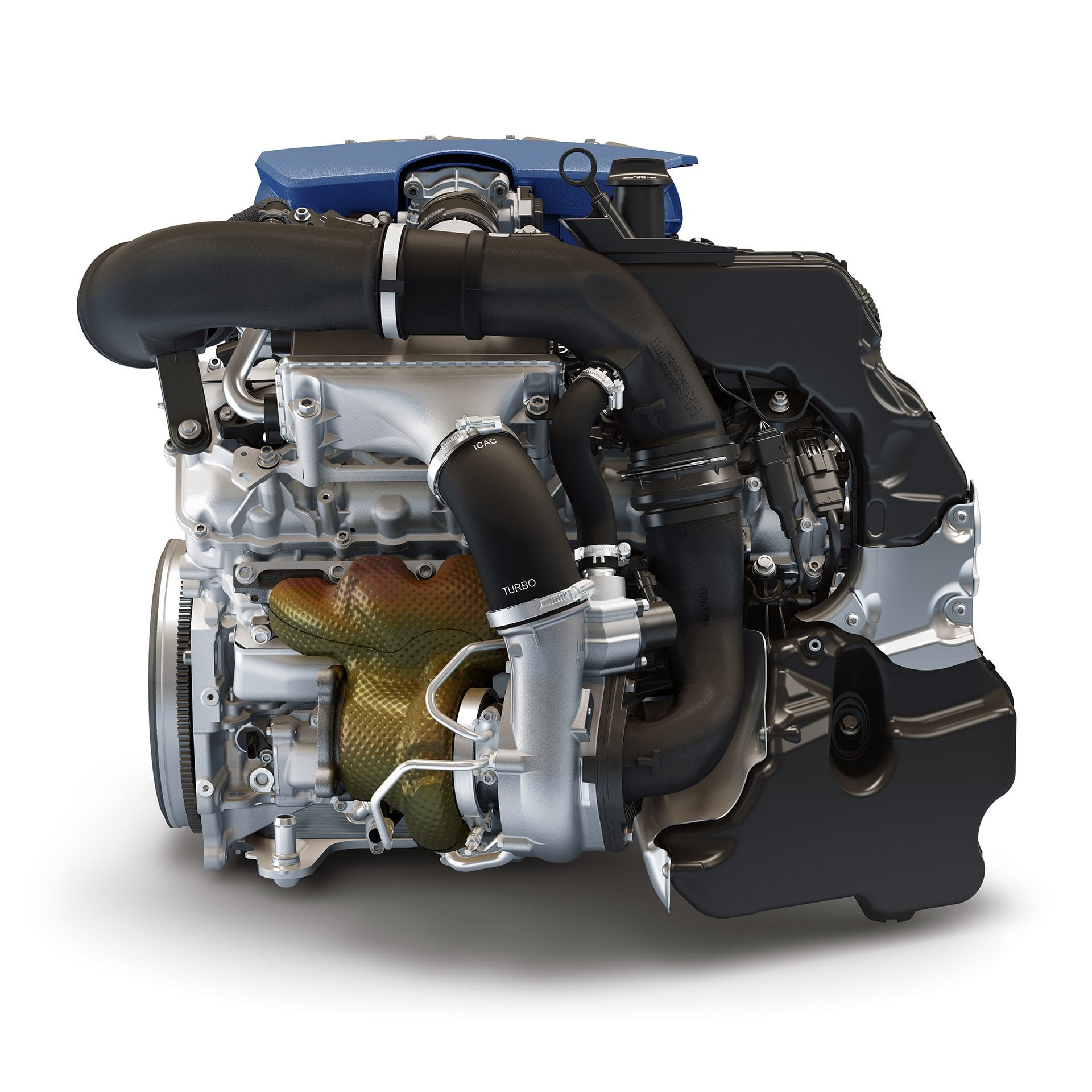
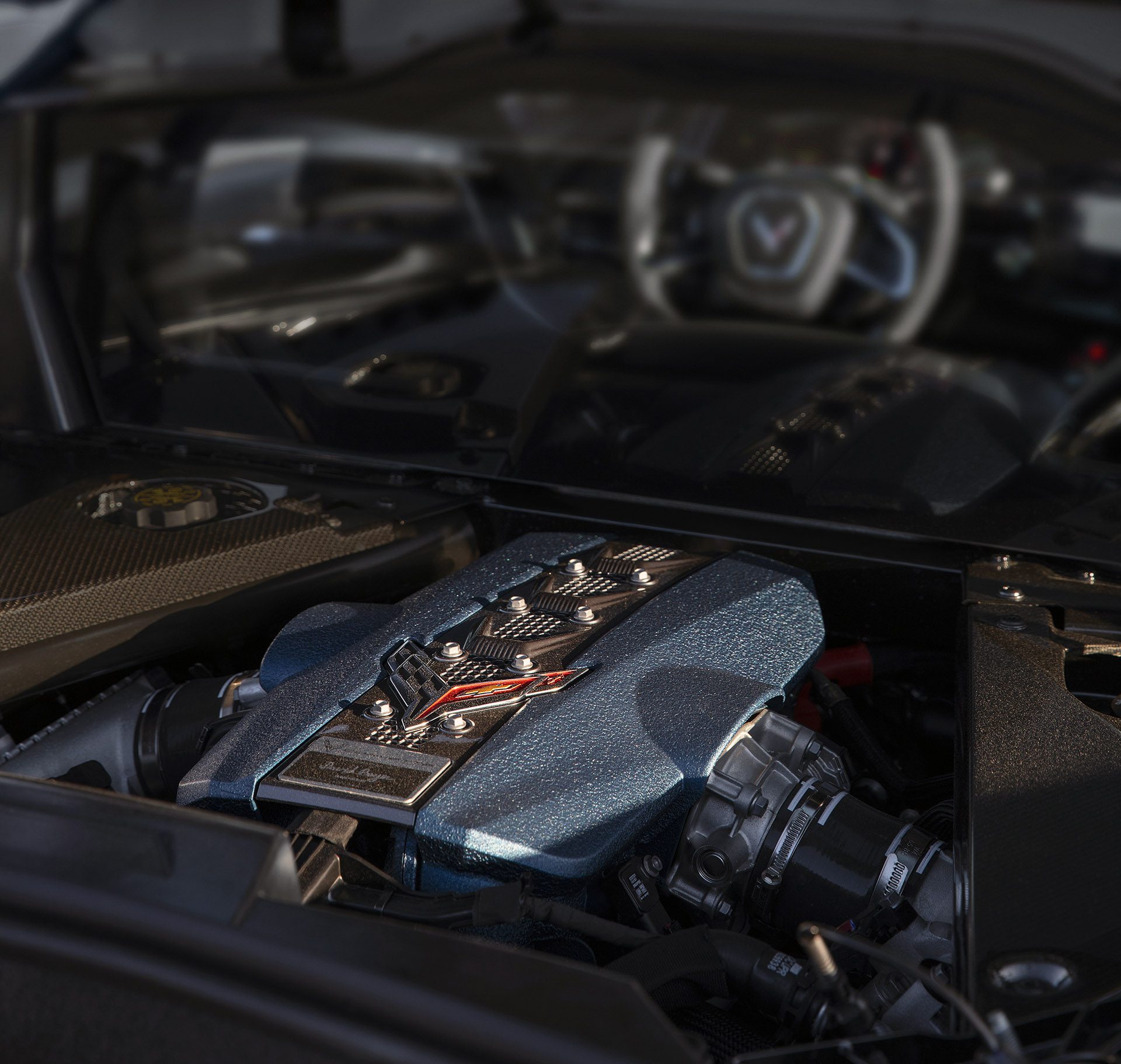
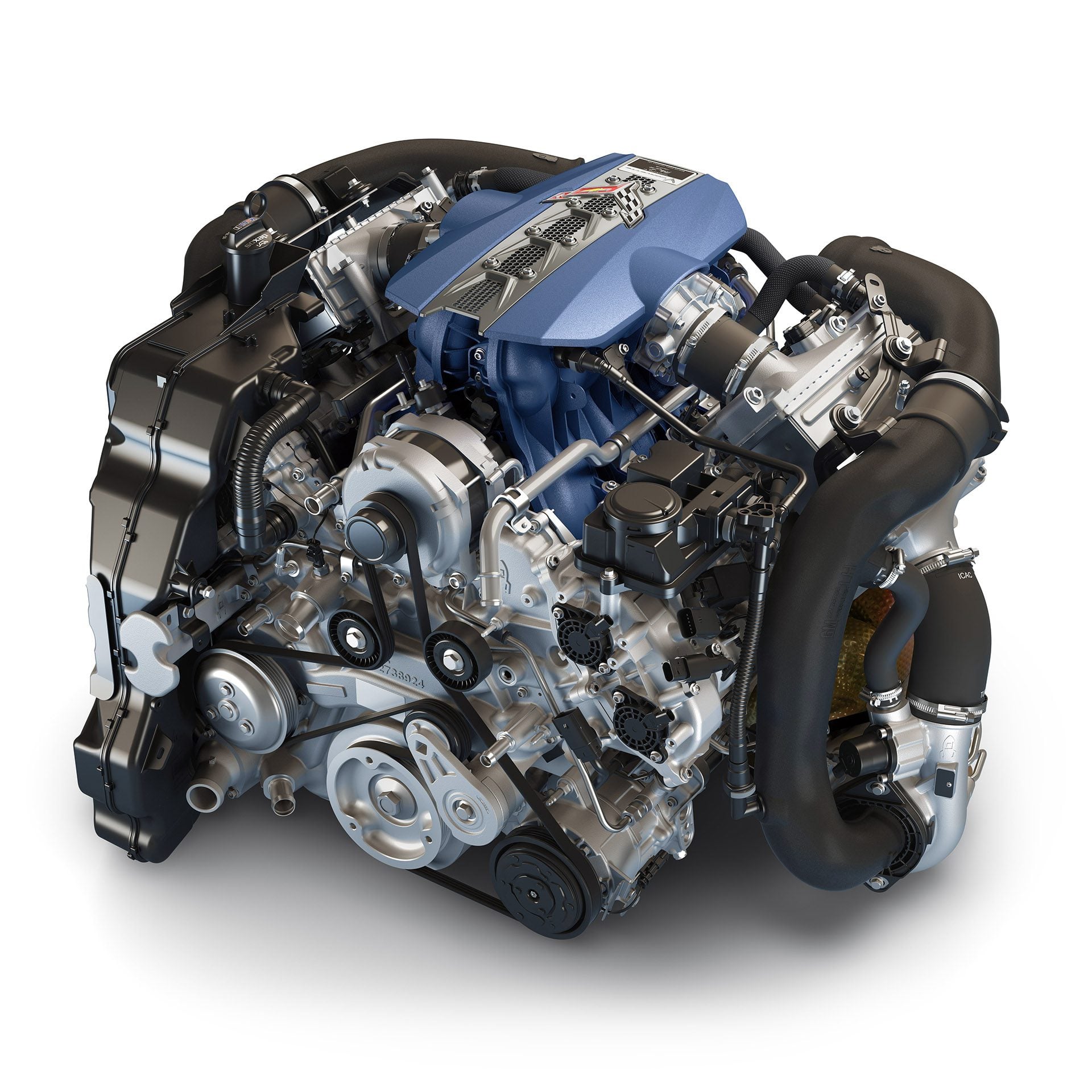
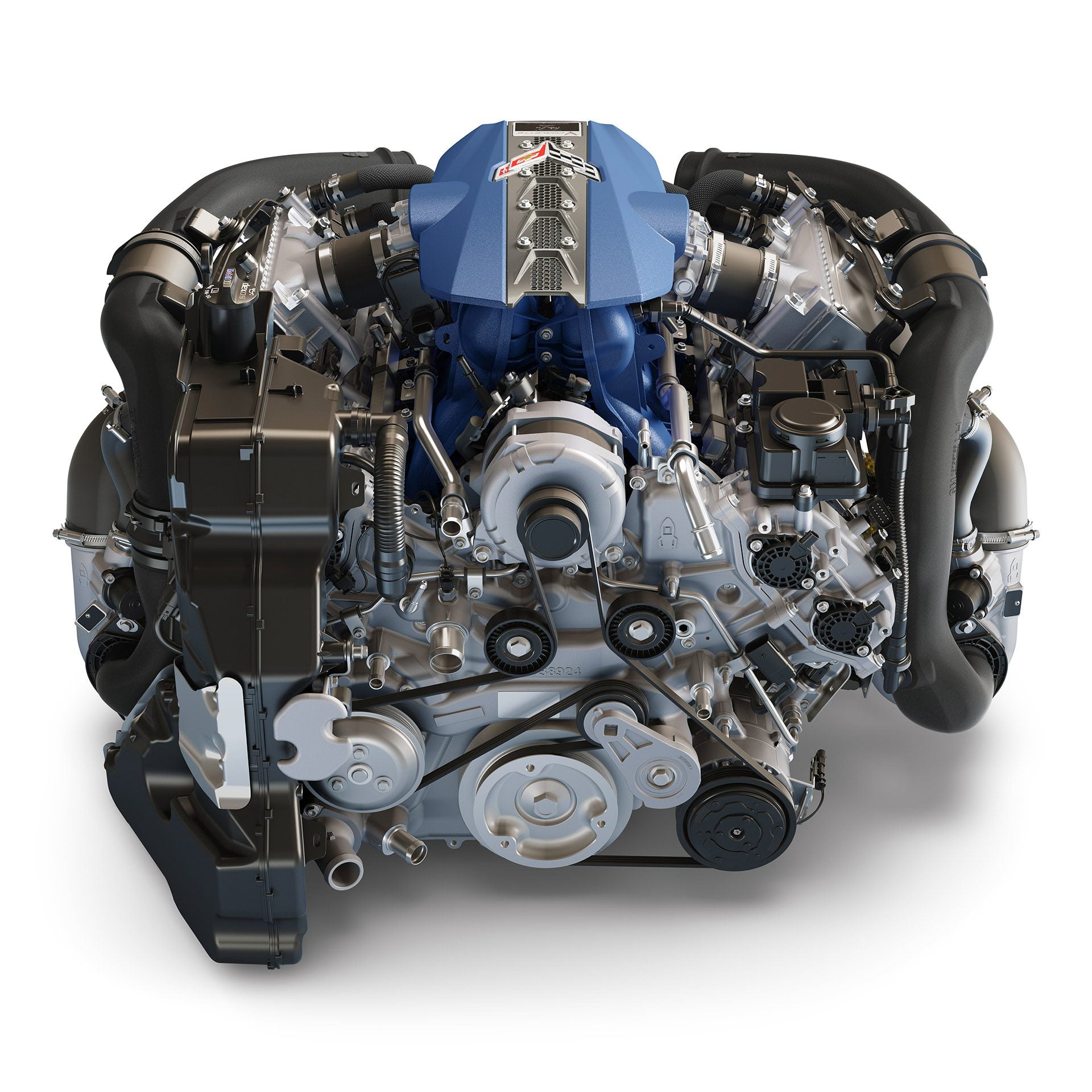
The result is the LT7. It keeps the LT6’s 5.5-litre flat-plane crank architecture — the flat-plane crank is what gives the engine that Ferrari-like, high-revving, mechanical shriek rather than the burbling V8 note you’d expect from an American engine — and grafts on two 76mm mono-scroll turbochargers that are integrated directly into the exhaust manifold. The short distance from the exhaust valve to the turbo means near-zero lag. Electronically actuated wastegates and an anti-lag system ensure the power builds instantly, seamlessly, and without the hesitation you’d expect from a forced-induction engine of this size.
The result is 1,064 hp at 7,000 rpm and 828 lb-ft of torque at 6,000 rpm — figures that require 93-octane fuel to achieve, and still “over 1,000 horsepower” on lower octane. Either way, you’re in the four-figure power club. On a $175,000 car. From a brand that also makes pickup trucks.
A note on the number: That 1,064 hp figure makes the LT7 the most powerful V8 ever produced by an American auto manufacturer. More powerful than the Dodge Demon’s supercharged 6.2-litre. More powerful than the Shelby GT500’s Predator V8. More powerful than anything Ford, Dodge, or GM has ever put into a production road car. This is a landmark achievement in American automotive engineering, and it deserves to be recognised as such.
Performance Numbers: The Part That Makes Other Supercar Makers Nervous
| Spec | Figure |
|---|---|
| Engine | 5.5L LT7 Twin-Turbo DOHC V8 (Flat-Plane Crank) |
| Power | 1,064 hp @ 7,000 rpm |
| Torque | 828 lb-ft @ 6,000 rpm |
| Transmission | 8-speed dual-clutch automatic |
| Drive | Rear-wheel drive |
| 0-60 mph | 2.3 seconds |
| Quarter Mile | 9.6 seconds @ 150 mph |
| Top Speed | 233 mph — fastest American production car, ever |
| 80-200-80 mph | 24.5 seconds |
| Weight (Coupe) | 3,670 lbs dry |
| Weight (Convertible) | 3,758 lbs dry |
That 80-200-80 mph figure deserves its own paragraph. Chevrolet quotes it at 24.5 seconds — that’s 0 to 200 mph and back to 80 mph in under 25 seconds. That is 22% quicker than the C7 Corvette ZR1, which was itself considered a lunatic machine by anyone who drove it. And it is 53% quicker than the C6 ZR1. The braking performance alone — 400mm carbon-ceramic discs front, 390mm rear, six-piston front calipers — is enough to induce genuine physical discomfort in a passenger who wasn’t prepared for it.
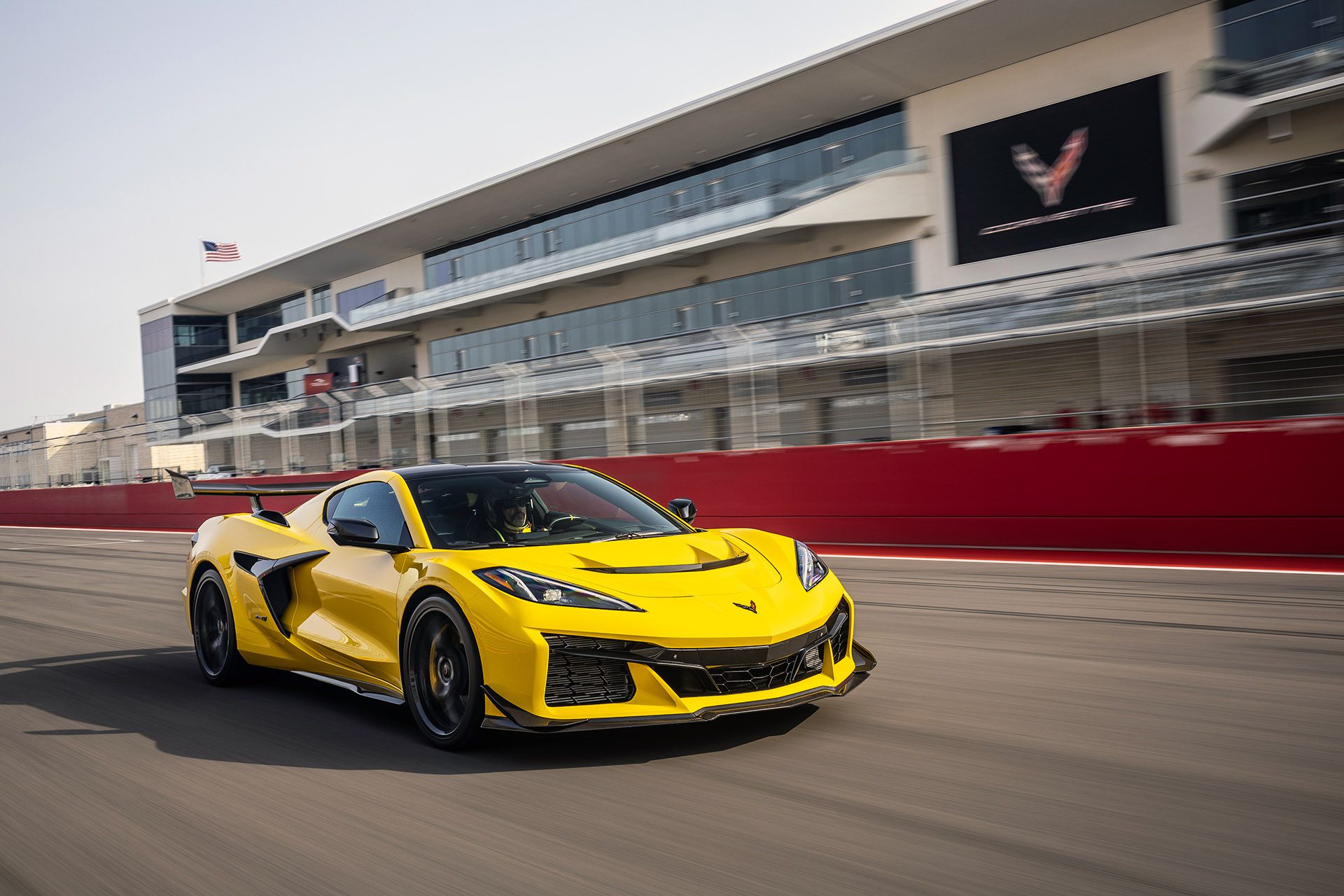
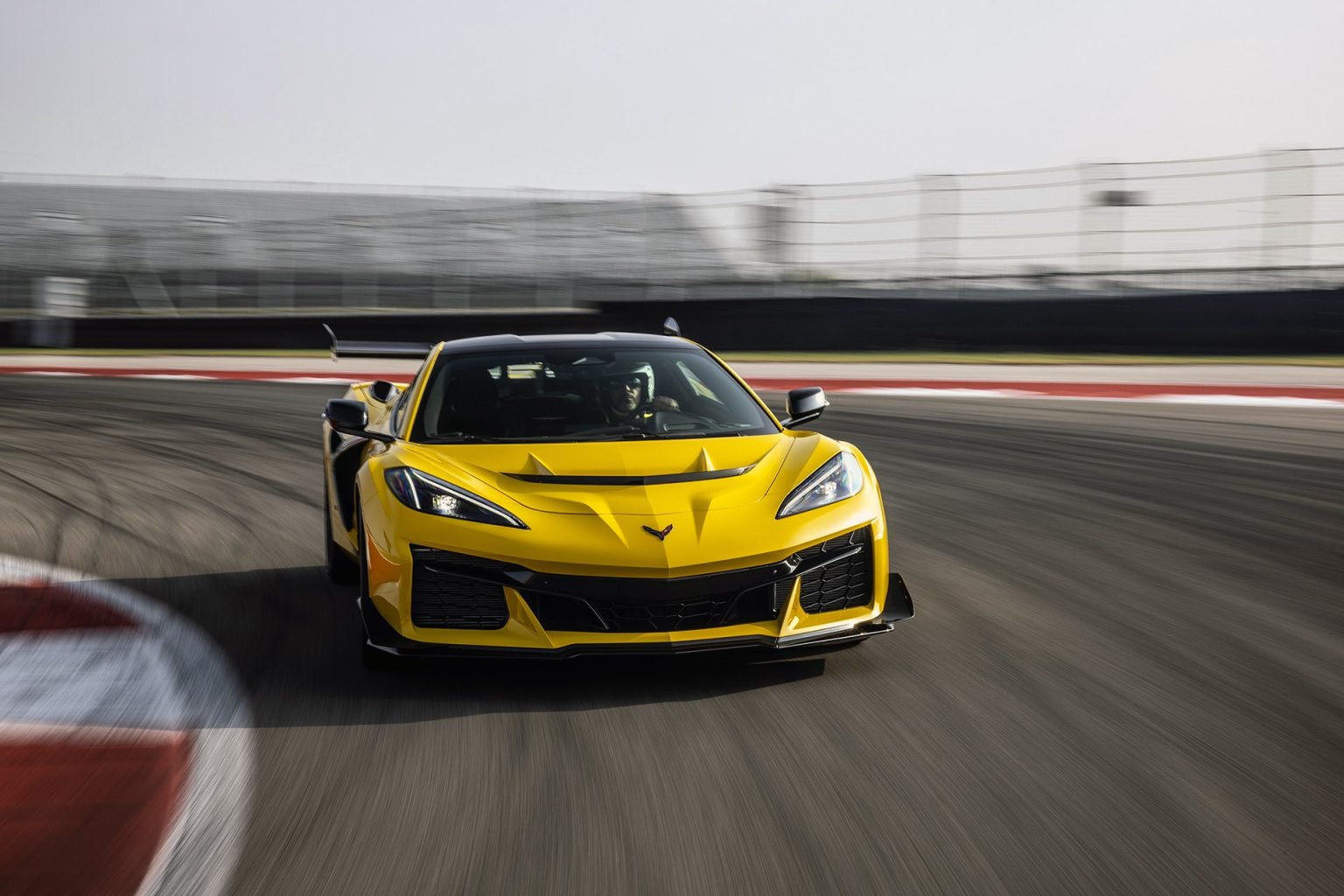
Those who drove it at the Circuit of the Americas reported braking from 177 mph at the end of the main straight. To put that in the most direct possible terms: you are arriving at a corner faster than most road cars ever travel in a straight line. And the ZR1 simply deals with it.
Aerodynamics: 1,200 Pounds of Downforce and a Split Window From 1963
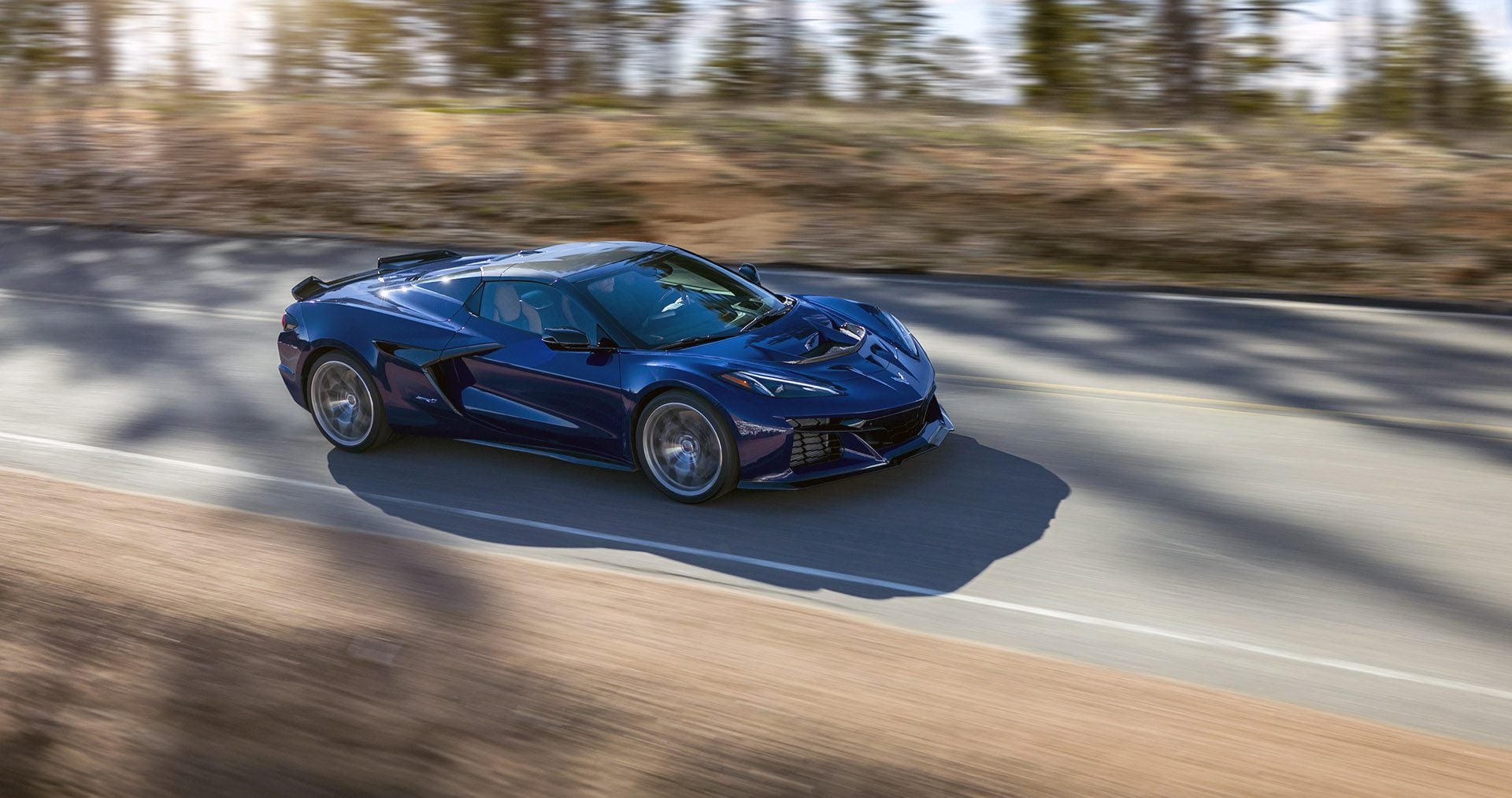
The aerodynamics of the ZR1 are not an afterthought. They are a central part of what makes this car work at the speeds it operates at.
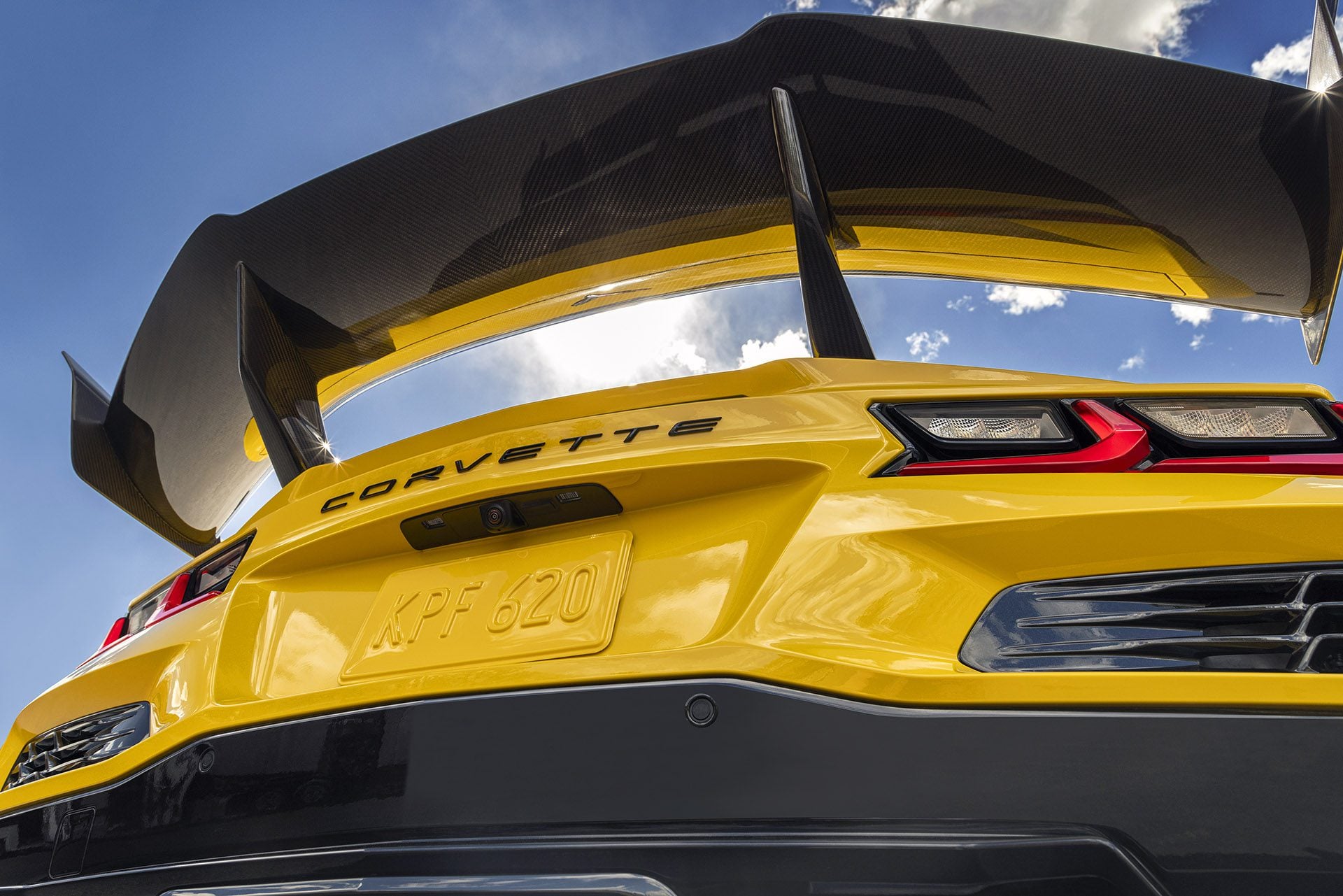
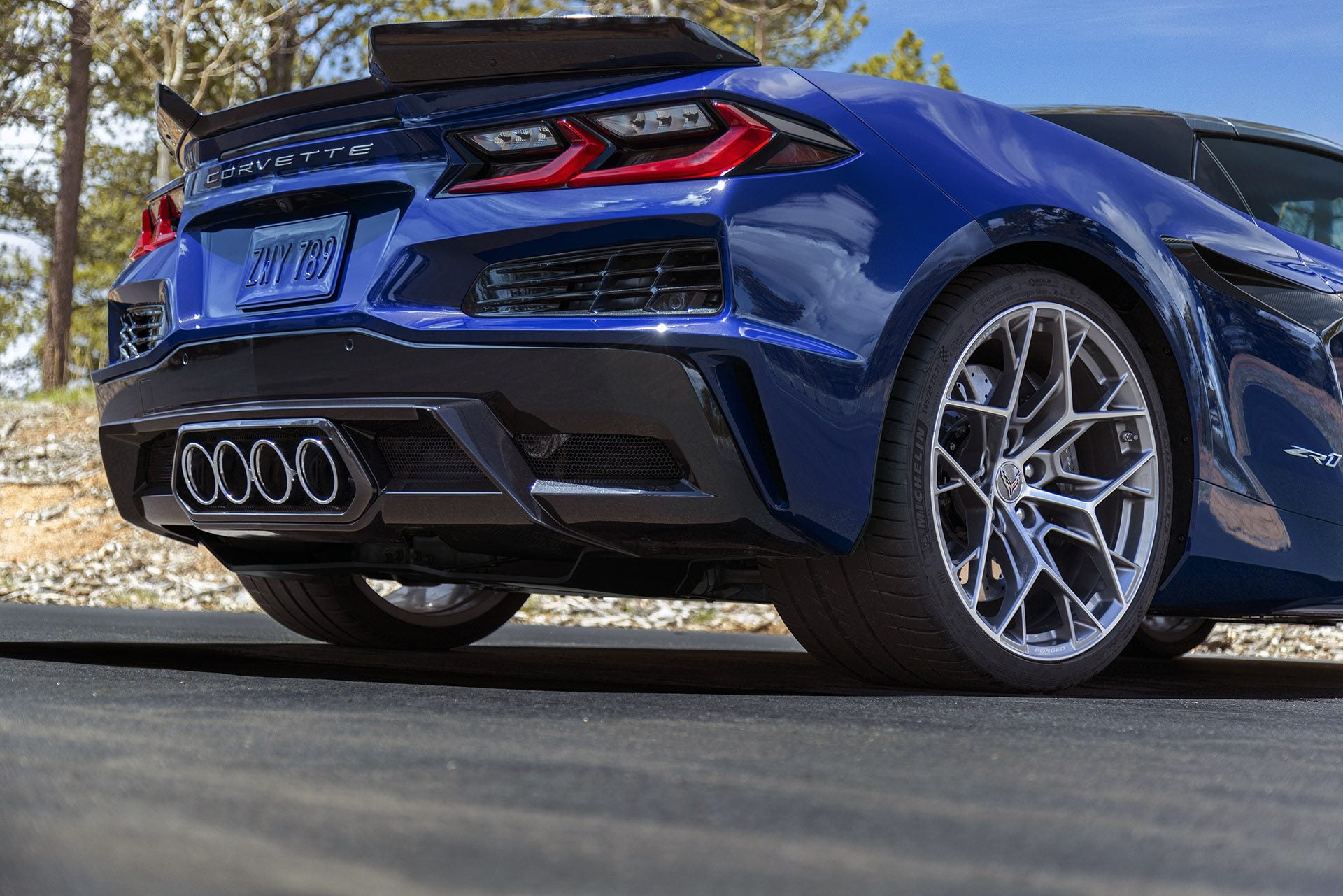
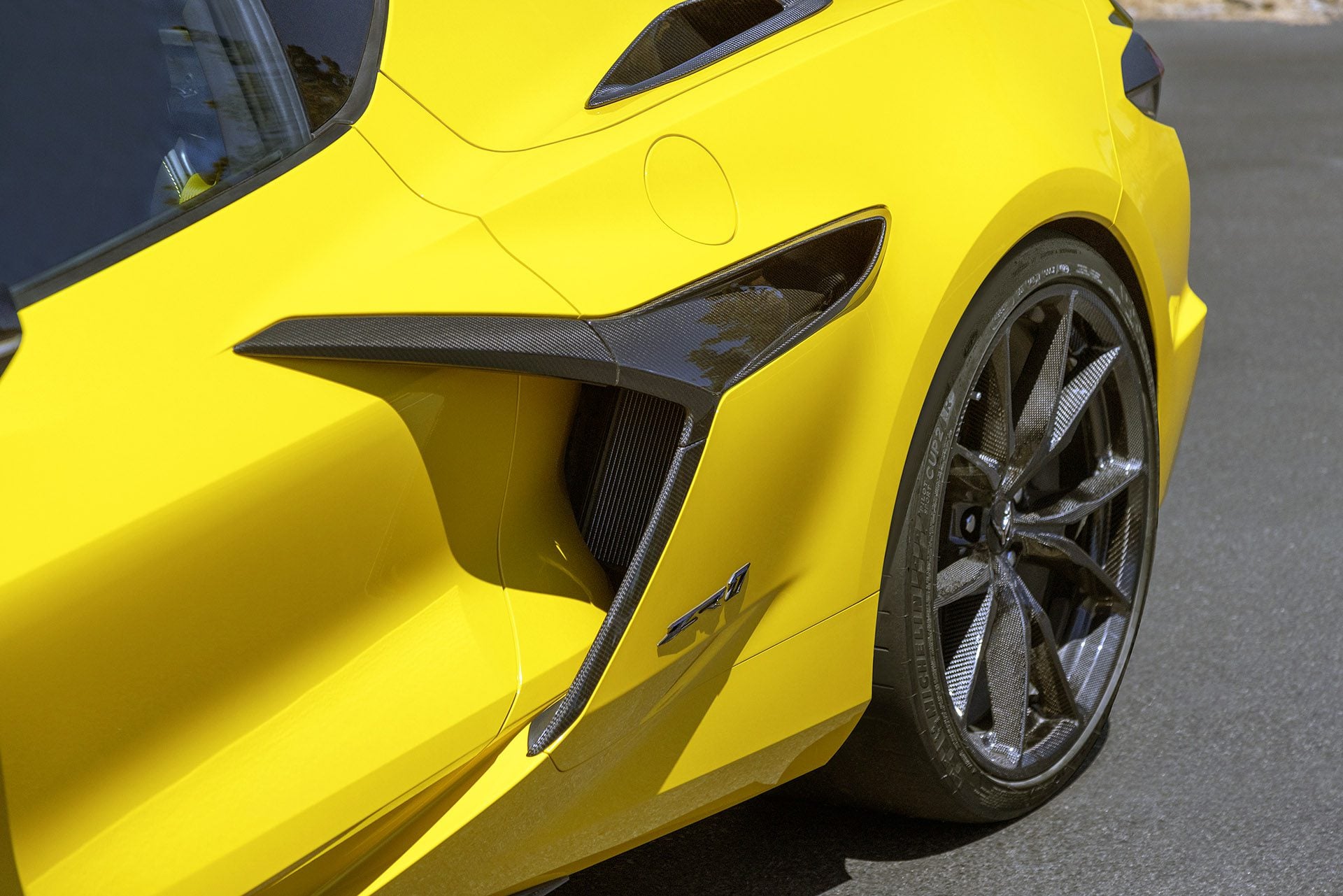
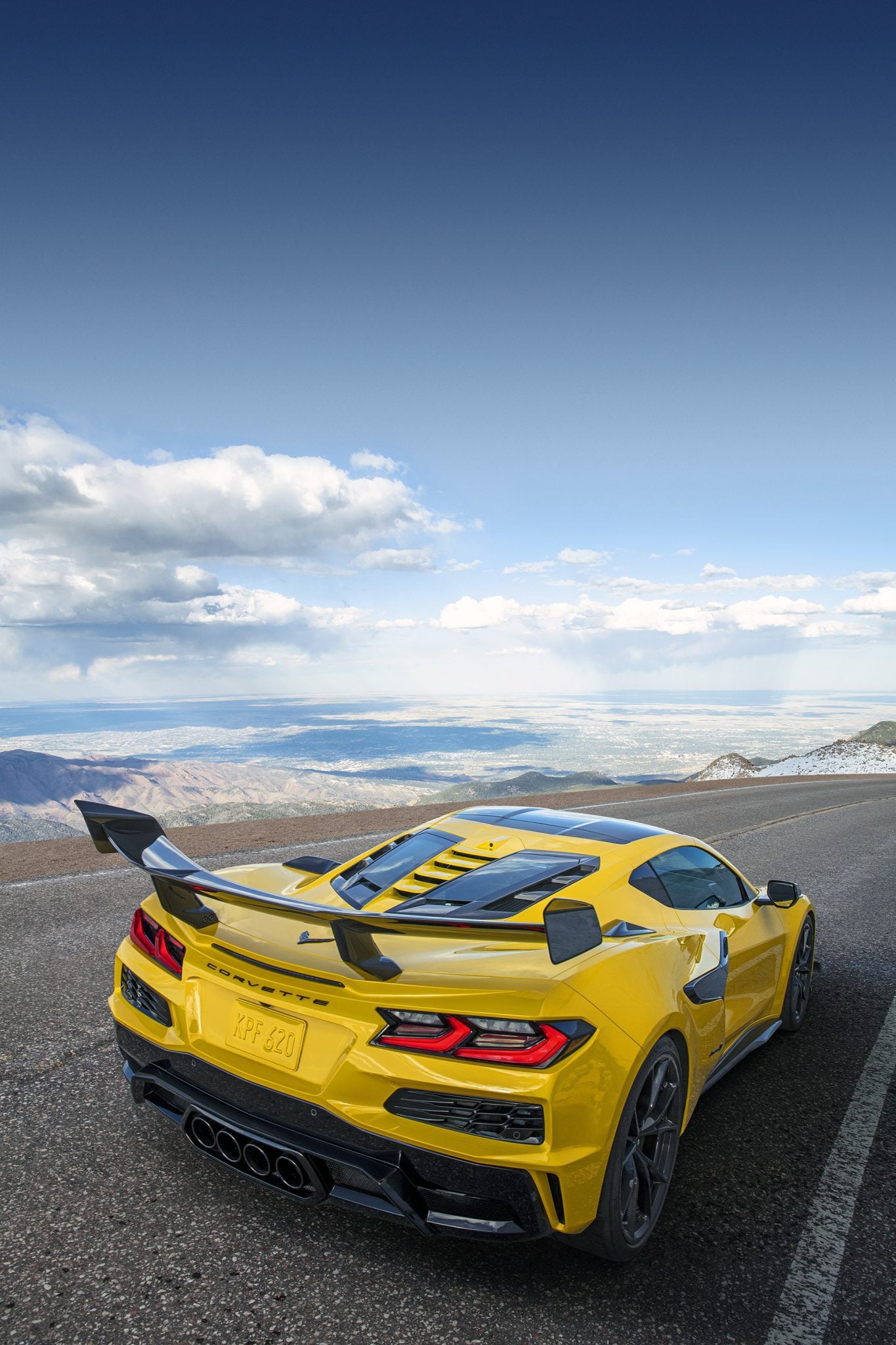
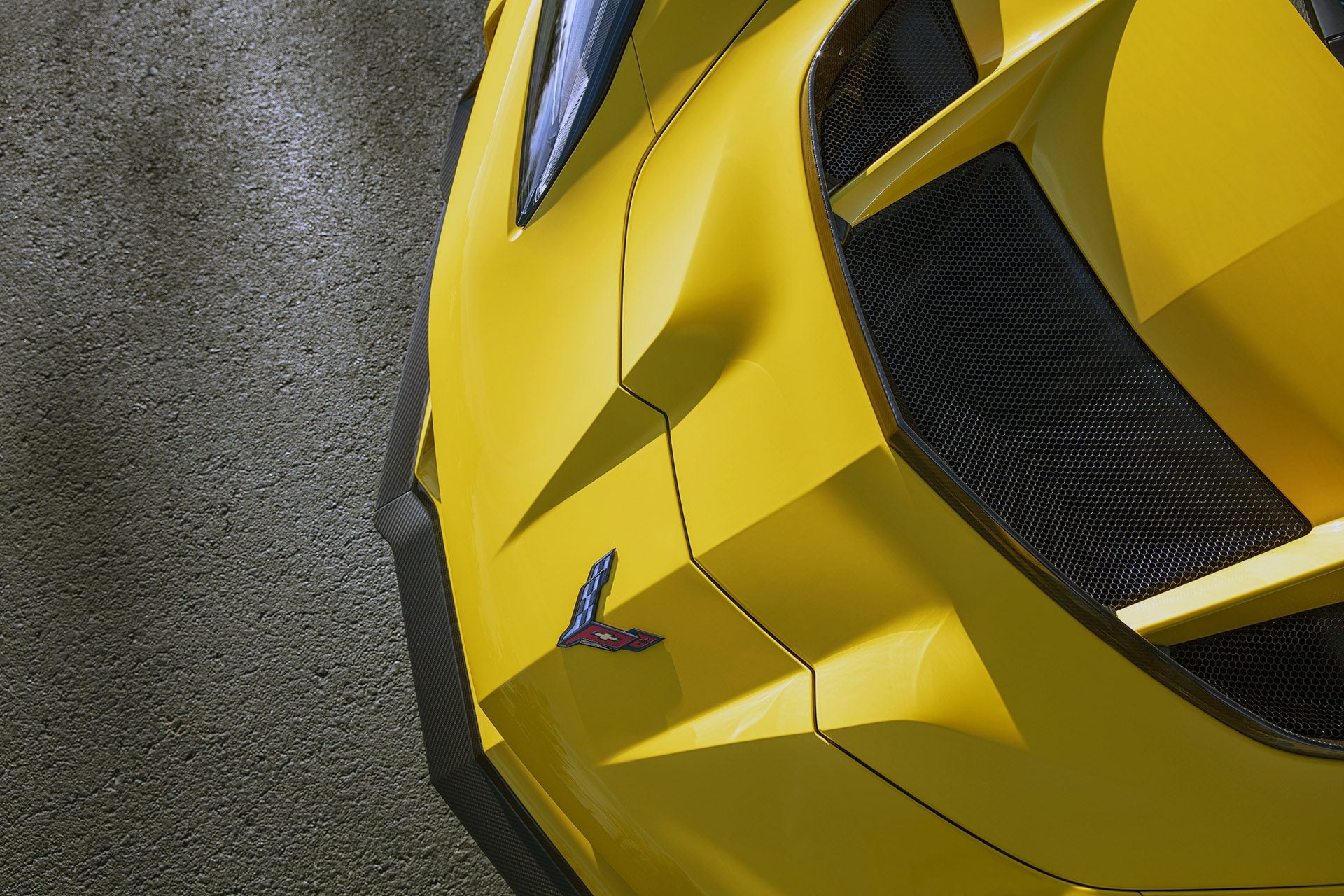
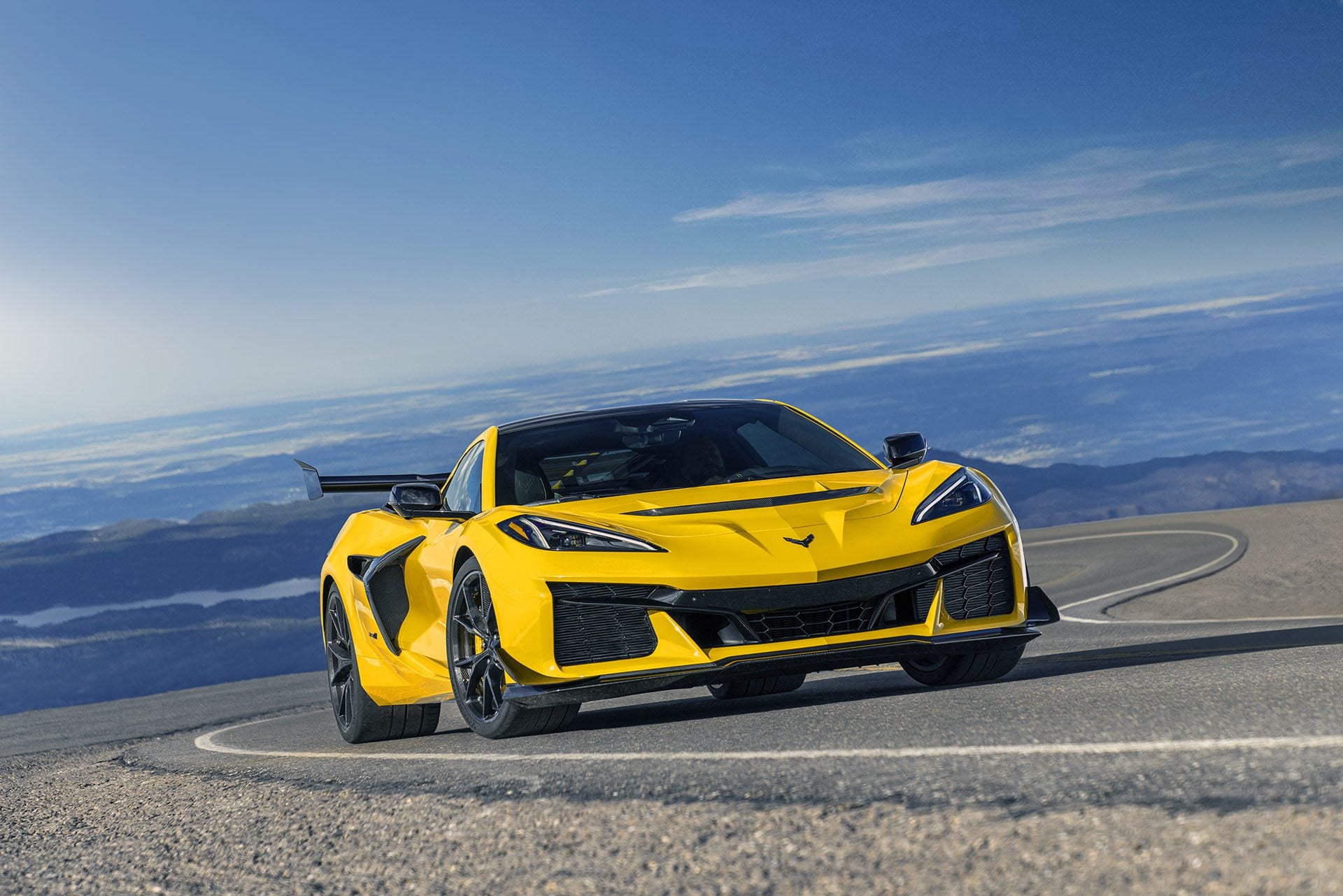
The standard car comes with a carbon fibre front splitter, rocker panels, wishbone-bezeled side air inlets that channel cool air directly to the rear brakes, a flow-through hood that pulls air through the intercooler heat exchanger and exhausts it out the top to increase front downforce, and a louvred rear hatch with carbon fibre inlets that cool the turbo compressor inlet temperatures. It’s an aerodynamic system that works the entire body of the car, not just a wing bolted on at the back. At top speed, even the standard ZR1 generates over 1,200 pounds of downforce. That’s more than any production Corvette before it.
The ZTK Performance Package
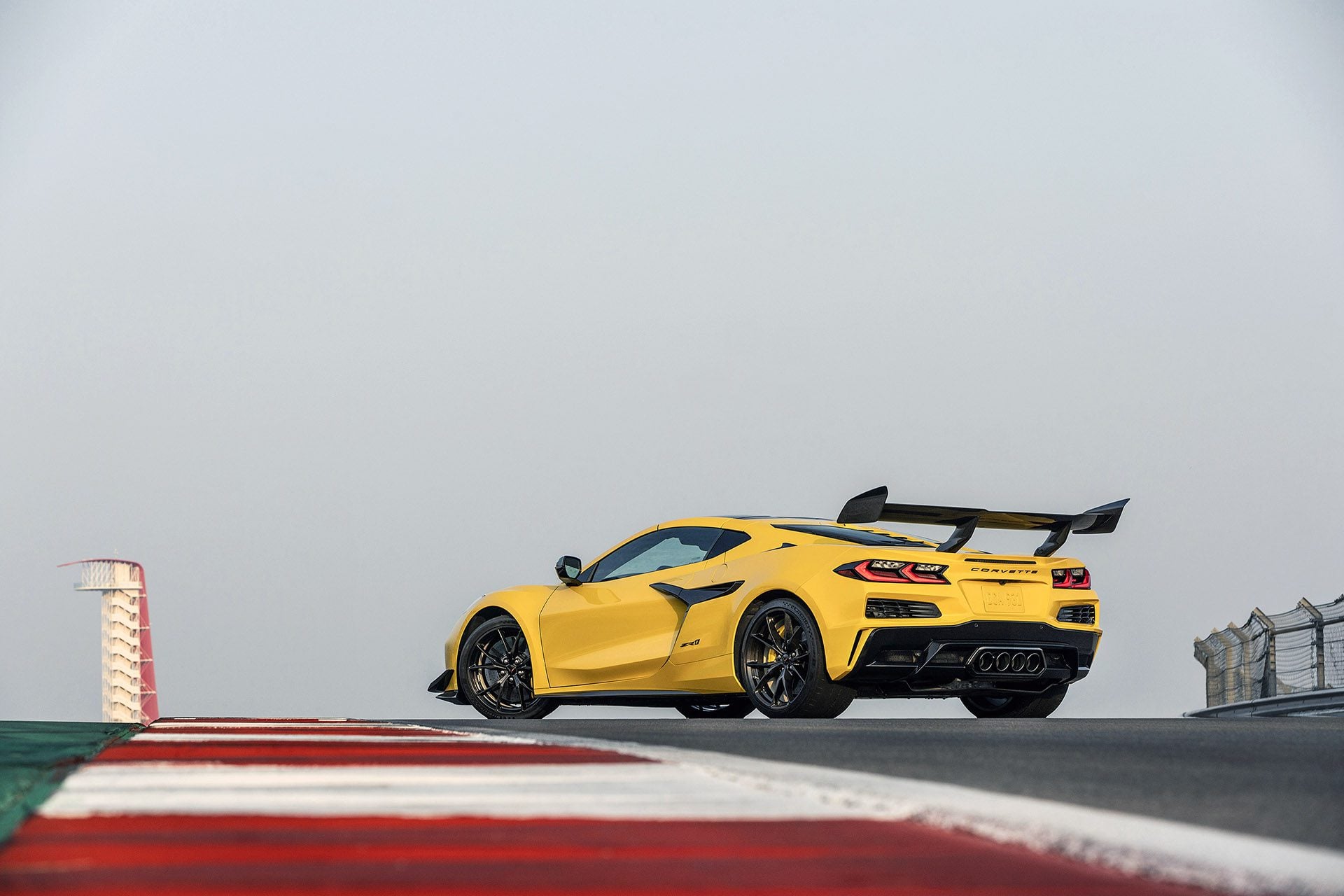
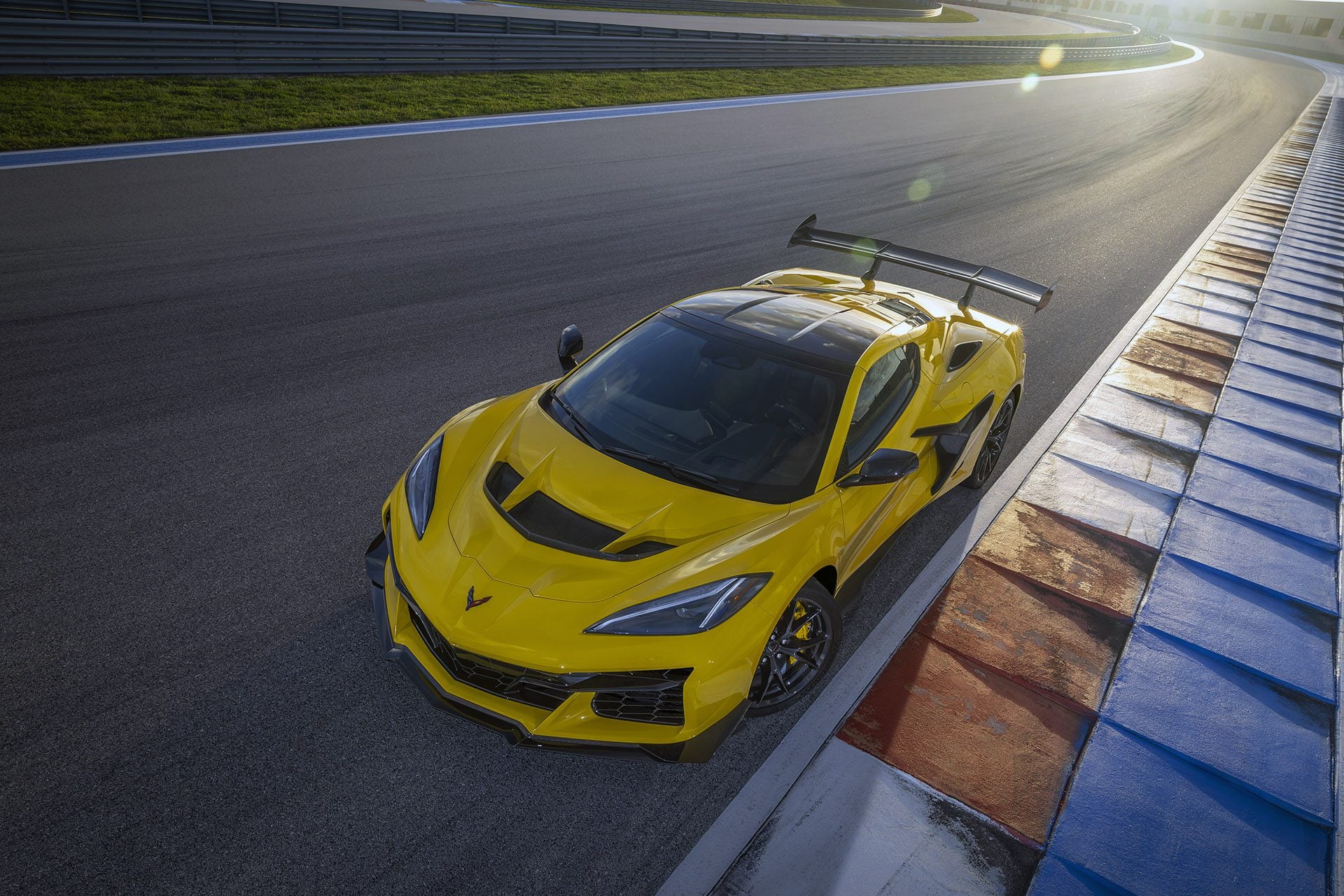
The ZTK package takes the ZR1’s aerodynamics from impressive to almost confrontational. It adds a massive high-downforce rear wing, front dive planes, and a tall hood Gurney lip — all woven carbon fibre — along with underbody strakes that replace the standard front underwing to maximise front downforce. Stiffer springs and Michelin Pilot Sport Cup 2 R tyres complete the transformation.
The result is a car that, with the ZTK package, demands a proper racing circuit to make sense. COTA, Road Atlanta, Virginia International Raceway — these are the venues where the ZTK was developed and where it earns its money. During testing, the ZTK-equipped ZR1 achieved 1.9G of deceleration. That number is the figure that separates serious racing hardware from road car performance parts.
At the end of the main straight at COTA, braking from 177 mph, the seat belt locked and I felt like I was standing on the brake pedal. More than 1.5G of deceleration, just like that.
Design: The Split Window is Back, and It Belongs Here
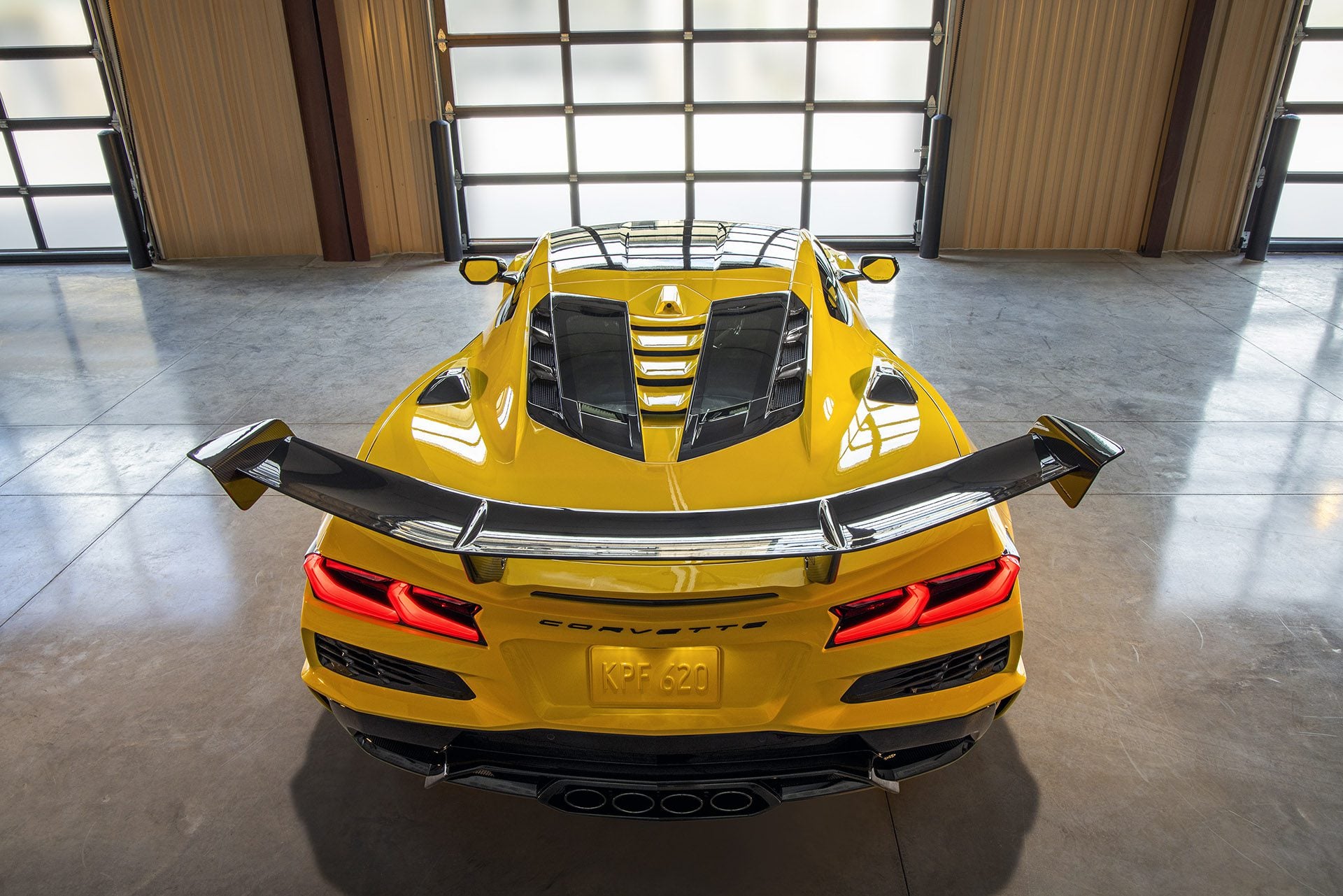
If you know your Corvette history, the split rear window will mean something to you. It appeared on the 1963 C2 Corvette Sting Ray as a fixed centre bar that divided the rear glass. Purists loved it. Zora Arkus-Duntov, the father of the Corvette, hated it and had it removed after a single model year. It is, consequently, one of the most sought-after and historically significant design elements in American car history.
It’s back on the ZR1. Not as nostalgia — as function. The louvred spine running down the centre of the rear hatch serves as a ventilation channel for the engine bay and turbo inlet cooling. The split window is literally working for a living on the ZR1 in a way it never could on the C2. The fact that it also looks extraordinary is a bonus.
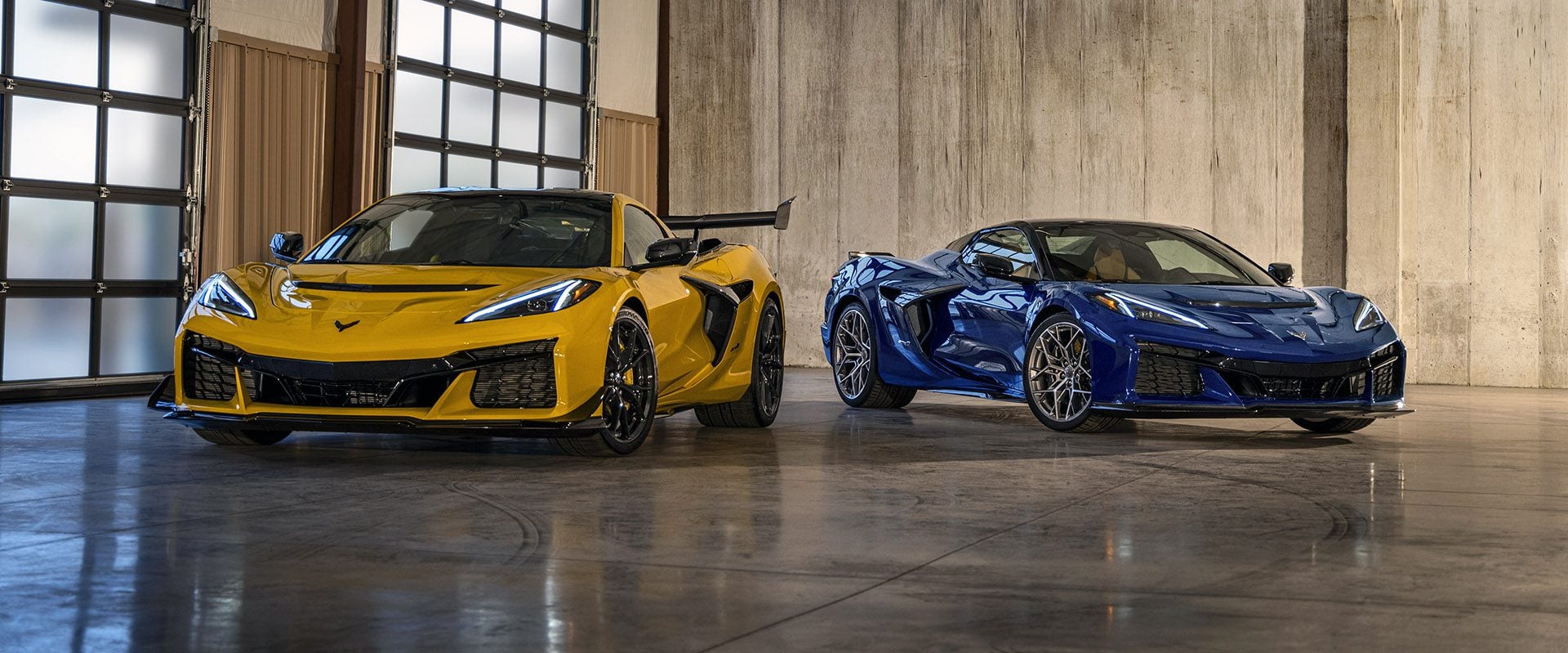
Beyond the split window, the ZR1’s exterior is the most aggressive C8 yet. The wide side air inlets with their carbon fibre wishbone bezels are visually striking and immediately identify the car. New colours for 2025 include Competition Yellow, Hysteria Purple, and the returning fan-favourite Sebring Orange — a nod to the C7 ZR1 in exactly the colour it deserves.
Interior: A Driver’s Cockpit Done Properly
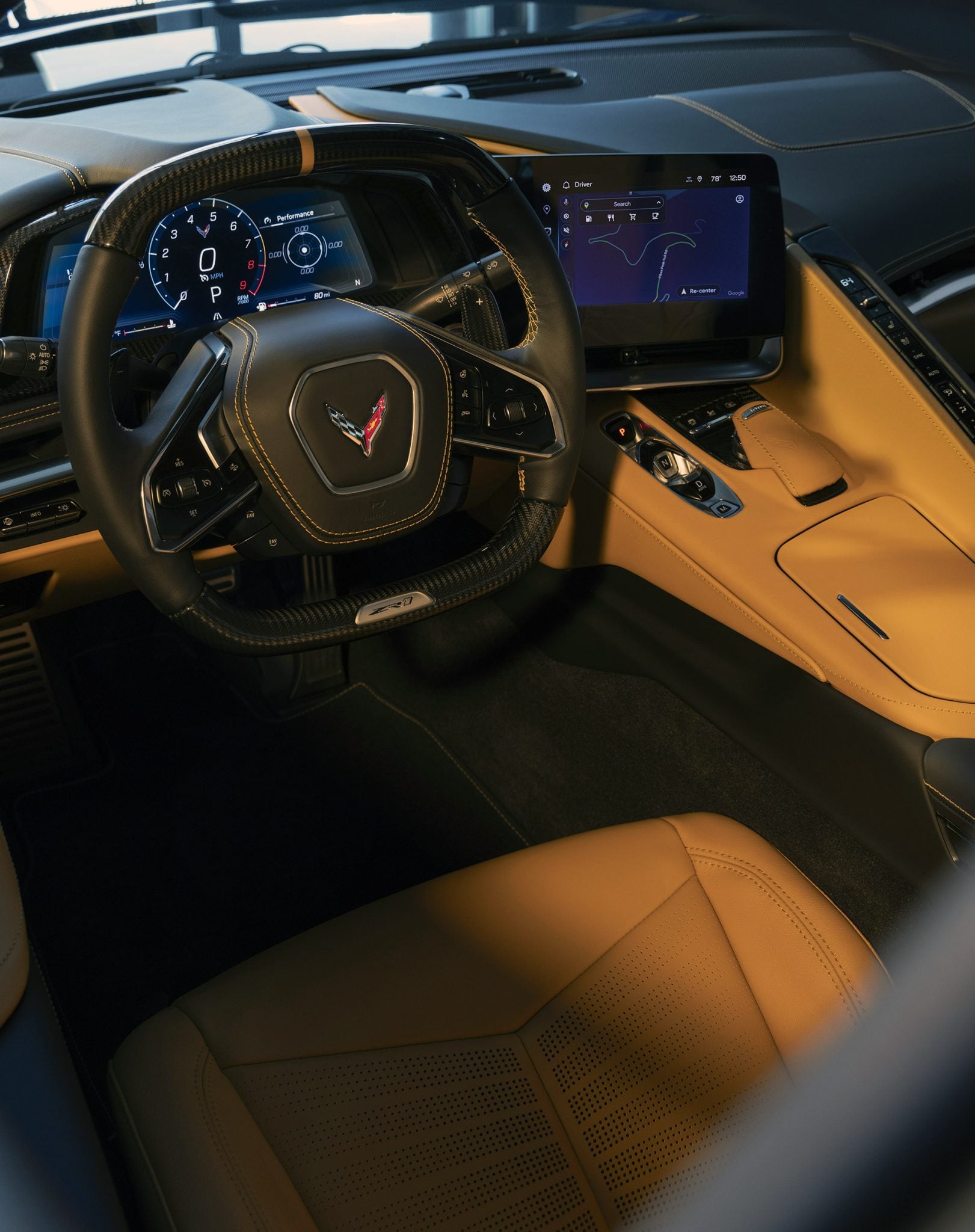
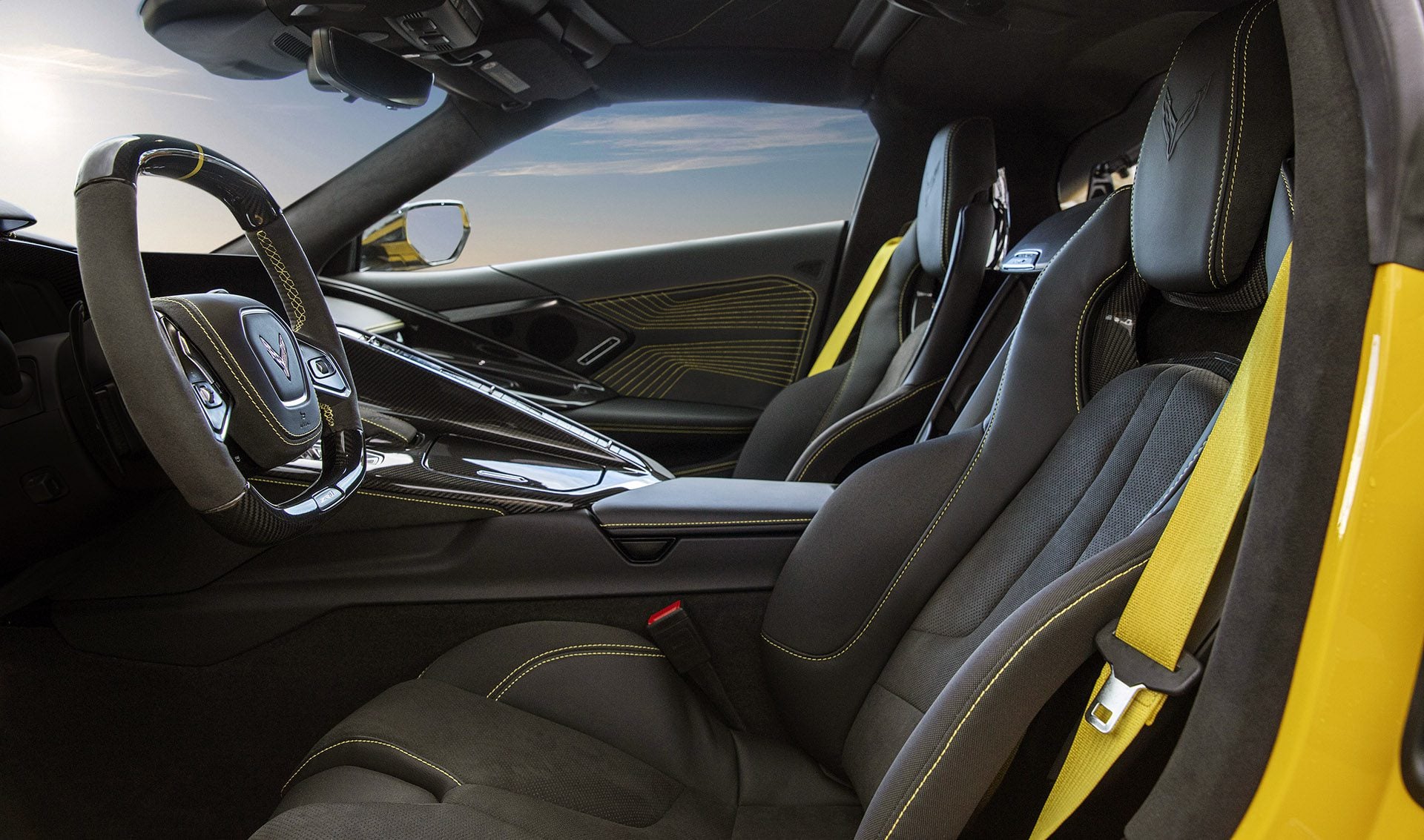
The ZR1’s cabin is pure C8 Corvette in its layout — a driver-centric cockpit with every control angled toward you, deep bolstered sport seats, and a flat-bottomed steering wheel that in the ZR1’s case gets a unique design specific to this model. The 8-inch touchscreen and 12-inch digital gauge cluster are standard; the 3LZ trim upgrades the audio to a 14-speaker Bose Performance Series setup.
What’s new and specific to the ZR1: a boost gauge. It occupies a prominent position in the instrument cluster — the first factory turbocharged Corvette ever, and Chevrolet wanted you to know it. ZR1 badging throughout, a door stitch pattern exclusive to the 3LZ trim, and a Performance App displaying real-time horsepower and torque curves round out the ZR1-specific interior touches.
New interior options include the Habanero colour scheme and a Blue Stitch package, which pairs with the exclusive blue brake caliper colour available only on the ZR1. It’s a small detail. It’s a good one.
Chevrolet Corvette ZR1 Convertible interior driver’s side view
Pricing, Trim Levels, and the Buying Reality
| Trim | Starting Price (incl. destination) |
|---|---|
| 1LZ Coupe | $174,995 |
| 1LZ Convertible | $184,995 |
| 3LZ Coupe | $185,995 |
| 3LZ Convertible | $195,995 |
| ZTK + Carbon Fibre Aero Package | +$9,995 |
| Fully loaded (as shown) | ~$229,155 |
The buying reality: this is a highly allocated car in its first model year. Chevrolet began accepting orders in mid-February 2025 through authorised Corvette dealers. Demand is significant, and dealer markups on first-year, limited-production performance cars are a fact of life in the US market. Getting a ZR1 at or near MSRP in 2025 will require either a strong relationship with your Corvette dealer or some patience. The advice most enthusiasts give: get on a dealer list now. The 2025 model year will be more exclusive and more collectible than whatever follows.
ZR1 vs Z06: Why Both Exist, and Who Should Buy Which
The Z06 is not a lesser car because the ZR1 exists. The Corvette Z06 with its naturally aspirated 670 hp LT6, its 8,600 rpm redline, and its analogue, screaming character remains one of the greatest driver’s cars in the world at any price. At around $110,000 in base trim, it is a genuine Porsche GT3 competitor that costs significantly less than the car it rivals.
The ZR1 is a different animal entirely. More power — 394 hp more. More downforce. More straight-line violence. More of everything that makes a supercar memorable. But also more weight, slightly more front-end heft from the radiators and cooling required for the twin turbos (the ZR1 sacrifices the front storage trunk found in other C8s to accommodate the extra cooling hardware), and a character that is more emphatic about being driven hard.
Buy the Z06 if you want the pure, naturally aspirated, high-revving sports car experience. Buy the ZR1 if you want to arrive at a trackday and make everyone else in the paddock quietly reconsider their life choices.
And Then There’s the ZR1X: Chevrolet Went Full Hypercar
If the ZR1 isn’t enough for you — and for most people it should be — Chevrolet announced the 2026 Corvette ZR1X in June 2025, and it takes everything you just read and adds electrified all-wheel drive on top of it.
The ZR1X keeps the same hand-built LT7 twin-turbo V8 from the ZR1, producing the same 1,064 hp and 828 lb-ft of torque. Then it adds a front-mounted electric motor developing 186 hp and 145 lb-ft of torque, for a combined system output of 1,250 horsepower. That makes it the most powerful production Corvette ever built, and alongside the ZR1, gives Chevrolet the most powerful American performance car duo from any manufacturer on the planet.
The numbers back that up: 0-60 mph in under 2 seconds, quarter mile in under 9 seconds. That is hypercar territory — the kind of territory previously occupied by things like the Bugatti Chiron and Koenigsegg Agera. The ZR1X gets there from a starting price of $207,395, which is still less than a base Porsche 911 Turbo S and McLaren Artura combined.
The ZR1X uses a significantly upgraded version of the eAWD architecture developed for the Corvette E-Ray, with a system that constantly monitors driver inputs and vehicle conditions to blend power between the two axles in real time. On track, it has dedicated energy management modes: Endurance mode for extended lapping sessions, Qualifying mode for maximum single-lap pace, and Push-to-Pass for that extra surge when you need it most. The braking system steps up to Alcon 10-piston front and 6-piston rear carbon-ceramic calipers — the same hardware that produced 1.9G of deceleration during ZTK testing.
So where does that leave the ZR1? Exactly where it was. The ZR1 is the pure, rear-wheel-drive, 1,064 hp expression of this platform — the driver’s car in this duo. The ZR1X is the all-weather, all-surface, all-excuses-removed version that will simply go faster in more conditions on more days of the year. They are different tools for different purposes, and the fact that Chevrolet now offers both — at prices that would embarrass every European rival — is frankly remarkable.
Supercar Reality Check: What $175,000 to $200,000 Buys You Elsewhere
| Car | Power | 0-60 | Starting Price |
|---|---|---|---|
| 2025 Corvette ZR1 | 1,064 hp | 2.3 sec | $174,995 |
| Ferrari Roma | 612 hp | 3.4 sec | ~$280,000 |
| Lamborghini Huracan EVO | 631 hp | 3.3 sec | ~$260,000 |
| Porsche 911 Turbo S | 640 hp | 2.5 sec | ~$230,000 |
| McLaren Artura | 690 hp | 3.0 sec | ~$249,100 |
| Ferrari SF90 Stradale | 986 hp | 2.5 sec | ~$530,000 |
The SF90 Stradale is the closest competitor on outright performance numbers, and it costs $530,000. The Corvette ZR1 is faster in a straight line and within a rounding error on 0-60 time, for $355,000 less. Nobody who builds the SF90 or the 911 Turbo S wants to acknowledge the ZR1 in the same conversation, and yet here we are.
Is the Ferrari more refined? Yes. Is the Porsche more usable daily? Probably. Does either of them have 1,064 horsepower from a V8 hand-built in Kentucky? No. The ZR1 is not trying to be European. It’s trying to beat European. And at these numbers, it’s doing exactly that.
Final Verdict
The 2025 Chevrolet Corvette ZR1 is a landmark car. Not just in the context of Corvette history — though it is absolutely that — but in the context of American automotive history. The most powerful V8 ever produced by an American manufacturer, in the fastest American production car ever built, for a price that makes every other supercar manufacturer look sheepish.
It is not perfect. The exclusivity of the first model year means actually getting one is a challenge. The interior, while excellent by Chevrolet standards, doesn’t match Ferrari or Porsche for material quality at this price point. And the twin-turbo character of the LT7, as spectacular as it is, doesn’t quite replicate the symphonic, high-revving experience of the naturally aspirated LT6 in the Z06.
But those are the criticisms of a car operating at such a level that finding flaws requires effort. The 2025 Corvette ZR1 is a once-in-a-generation machine — the kind of car people will point to in twenty years as the moment American performance engineering genuinely, definitively, and without argument matched the very best the world had to offer. At any price. In any country.
At $174,995, it’s almost unfair to everyone else.
America’s finest hour. 1,064 hp, 233 mph, $174,995. The 2025 Corvette ZR1.
Full Specifications
| Spec | Detail |
|---|---|
| Body Styles | Coupe / Hardtop Convertible |
| Engine | 5.5L LT7 Twin-Turbo DOHC V8, Flat-Plane Crank |
| Turbochargers | Two 76mm mono-scroll turbos, integrated into exhaust manifold |
| Power | 1,064 hp @ 7,000 rpm |
| Torque | 828 lb-ft @ 6,000 rpm |
| Transmission | 8-speed dual-clutch automatic |
| Drive | Rear-wheel drive |
| Suspension | Magnetic Selective Ride Control 4.0 |
| Brakes (Standard) | 400mm front / 390mm rear carbon-ceramic, 6/4-piston calipers |
| Brakes (ZTK) | Alcon 10-piston front / 6-piston rear calipers, carbon-ceramic |
| Tyres (Standard) | Michelin Pilot Sport 4S — 20″ front / 21″ rear |
| Tyres (ZTK) | Michelin Pilot Sport Cup 2 R — 20″ front / 21″ rear |
| Weight (Coupe) | 3,670 lbs dry |
| Weight (Convertible) | 3,758 lbs dry |
| 0-60 mph | 2.3 seconds |
| Quarter Mile | 9.6 sec @ 150 mph |
| Top Speed | 233 mph |
| Max Downforce | 1,200+ lbs (Carbon Fibre Aero package) |
| Starting Price (Coupe) | $174,995 incl. destination |
| Starting Price (Convertible) | $184,995 incl. destination |
| Built | Bowling Green Assembly Plant, Kentucky, USA |